
The first time I stumbled upon an AI powered video editor, I admit, I was skeptical. As someone who’s spent countless hours hunched over editing timelines, meticulously trimming frames, finessing transitions, and agonizing over color grades, the idea of a machine doing the heavy lifting felt… well, a bit like sacrilege. But curiosity, as it often does, got the better of me. And what I’ve witnessed since then has been nothing short of a paradigm shift in how we approach video content creation.
We’re living in a world ravenous for video. From bite sized TikTok to in depth YouTube documentaries, everyone, it seems, is either watching or making video. This explosion in demand has put immense pressure on creators, marketers, and businesses to produce high quality, engaging visual stories at an unprecedented pace. This is precisely where the promise of the AI video editor steps in, not as a replacement for human creativity, but as an extraordinarily powerful co pilot.
What Exactly Are These Intelligent Co-Pilots?
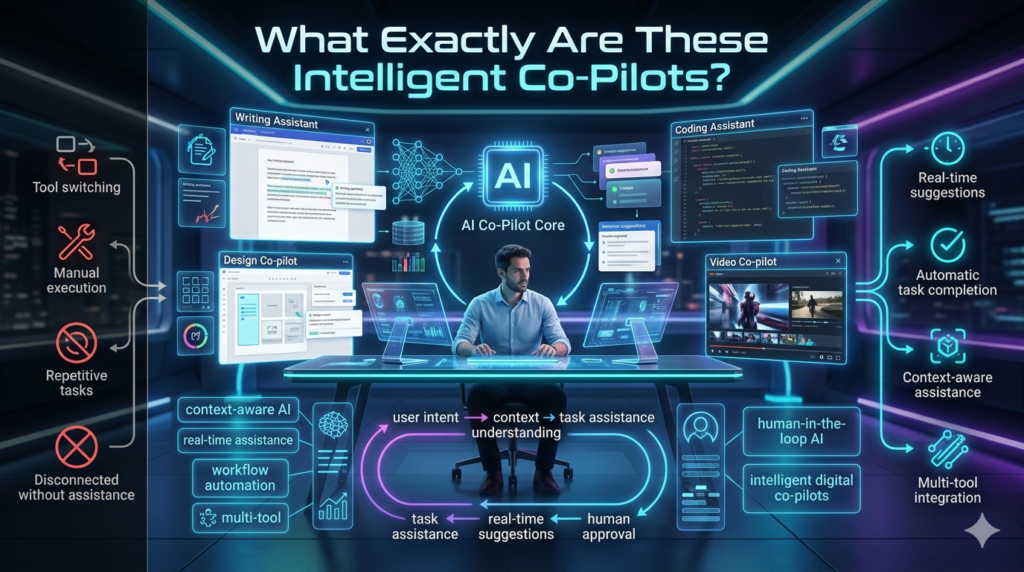
At its core, an AI video editor is a software application that leverages artificial intelligence and machine learning algorithms to automate and simplify various aspects of the video editing process. Think of it as having a highly intelligent assistant who can handle the repetitive, time consuming tasks, freeing you up to focus on the creative narrative. It’s not just about slapping clips together; these tools are becoming incredibly sophisticated at understanding context, emotion, and flow.
From my observation, the real magic happens behind the scenes with complex algorithms that have been trained on vast datasets of video, audio, and text. This training allows them to identify patterns, understand semantic meaning, and even predict optimal editing choices.
The “Magic” Behind the Workflow Transformation
So, how does an AI video editor actually work its wonders? It boils down to a few key areas where artificial intelligence excels:
- Transcript-Based Editing: This, for me, was one of the most immediate game-changers. Upload your footage, and the AI will automatically transcribe all spoken dialogue. Instead of scrubbing through hours of footage to find that one golden quote, you simply edit the text. Delete a sentence from the transcript, and the corresponding video clip is instantly removed. Need to reorder paragraphs? The video reorders itself. It’s like editing a document, but the output is a polished video.
- Automated Cutting and Scene Detection: Ever spent an afternoon cutting out pauses or ums and ahs from a talking head video? AI can do that in minutes. It can also intelligently detect scene changes, identify significant events, and even trim out dead air, leaving you with a much tighter edit.
- Smart Media Suggestions and Augmentation: Many AI video editing platforms integrate with stock media libraries. Based on your video’s content or the keywords in your transcript, the AI can suggest relevant stock footage, images, background music, and even sound effects. Some are even starting to offer generative AI features to create custom backgrounds or visual effects that match your video’s aesthetic.
- Intelligent Color Correction and Audio Sweetening: While a seasoned colorist or sound engineer brings an irreplaceable artistic touch, AI can perform impressive basic and even intermediate color grading and audio clean up. It can balance exposure, adjust white balance, reduce background noise, and even optimize vocal levels across different clips, giving your video a more professional sheen without manual fiddling.
- Dynamic Captions and Subtitles: Accessibility is key, and AI makes generating accurate, perfectly timed captions a breeze. Not only can it create them, but many tools can also automatically translate them into multiple languages, opening your content to a global audience with minimal effort.
Why This Matters: Benefits Beyond Belief
The advantages of integrating an AI video editor into your workflow are manifold:
- Unprecedented Time Savings: This is the most obvious and perhaps the most significant benefit. Tasks that once took hours, like initial rough cuts, transcript generation, or captioning, can now be completed in minutes. For busy content creators, small businesses, or marketing teams, this dramatically boosts productivity.
- Lowering the Barrier to Entry: You no longer need years of training or expensive software to produce professional looking videos. AI empowers beginners to achieve results that would have been unimaginable a decade ago, democratizing video creation.
- Enhanced Consistency: For brands, maintaining a consistent visual and auditory style is crucial. AI can help enforce brand guidelines by applying consistent color grading, text overlays, and audio profiles across all your video assets.
- Creative Freedom: Paradoxically, by automating the mundane, AI frees up human editors to focus on the truly creative, high-level storytelling aspects. Instead of spending hours on technical chores, you can devote that energy to narrative structure, emotional impact, and innovative visual choices.
- Scalability: If you need to produce a high volume of videos quickly perhaps for A/B testing ad campaigns or localizing content for different markets AI video editors provide the scalability needed to meet demanding schedules.
Real-World Scenarios Where AI Shines
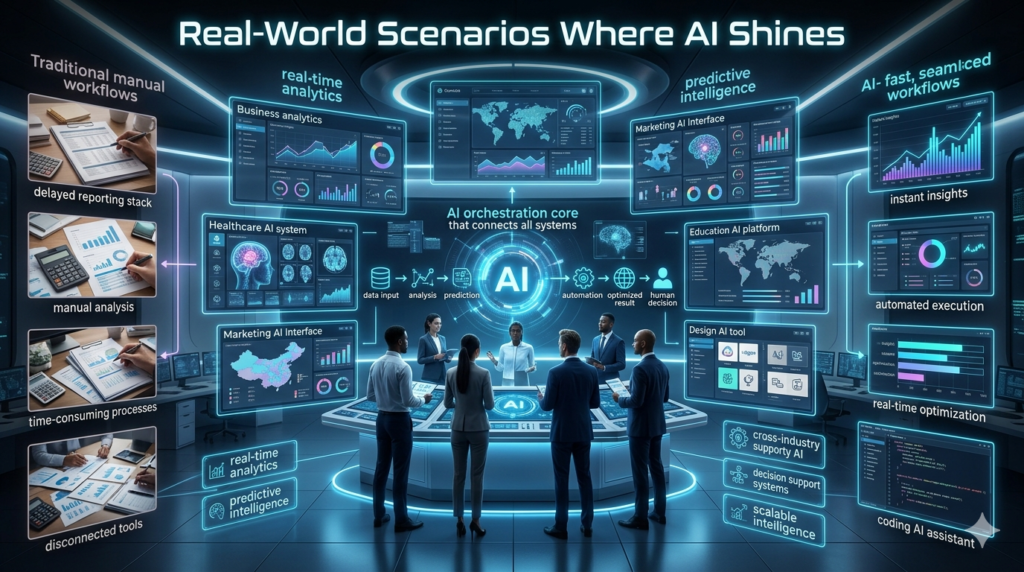
I’ve seen these tools transform various content pipelines. For instance:
- Social Media Mavens: Quickly turn long form interviews into dozens of short, punchy social media clips with automated captioning and aspect ratio adjustments for different platforms.
- E-Learning Developers: Efficiently edit hours of lecture footage, removing awkward pauses, generating searchable transcripts, and ensuring consistent audio quality across entire courses.
- Marketing & Sales Teams: Produce compelling product demos, customer testimonials, and explainer videos faster than ever, allowing for rapid iteration and deployment of campaigns.
- Journalists & Documentarians: Expedite the initial logging and assembly of interview footage, allowing more time for critical analysis and crafting the story.
The Nuances: It’s Not Always Perfect (Yet)
While the advancements are thrilling, it’s vital to acknowledge the current limitations. An AI video editor is a sophisticated tool, but it’s not a sentient artist.
- Loss of Granular Control: For highly artistic or complex projects, the nuanced timing, emotional pacing, and specific visual flair that a seasoned human editor brings are still largely unparalleled. AI might cut a scene efficiently, but it won’t inherently understand the subtle emotional beat missed by a half-second trim.
- Quality Variability: Not all AI tools are created equal. Some excel at transcription, others at effects. Results can vary, and sometimes the automated output still requires significant human refinement.
- Ethical Considerations: As AI becomes more sophisticated, especially with generative capabilities, the discussion around deepfakes and the ethical manipulation of reality becomes more critical. While most reputable tools operate within ethical boundaries, it’s a space that demands vigilance.
- A Tool, Not a Replacement: This is the most crucial point. AI video editors are powerful assistants. They augment human skill, they don’t replace human intuition, artistic vision, or the ability to tell a truly compelling story from the heart.
Choosing Your AI Co-Pilot
If you’re considering diving into this evolving landscape, here’s my advice:
- Identify Your Core Need: Are you drowning in long-form content? Struggling with captions? Need quick social media cuts? Different tools excel in different areas.
- Budget & Features: AI tools range from free basic versions to subscription based professional suites. Compare feature sets against your budget.
- Workflow Integration: How well does the AI editor fit into your existing workflow? Can it export in formats you need? Does it integrate with other tools you use?
- Try Before You Buy: Most reputable platforms offer free trials. Take advantage of them to see if the tool truly delivers on its promise for your specific content.
The Road Ahead: An Evolving Partnership
The future of video editing, in my view, is a fascinating collaboration between human creativity and artificial intelligence. We’re going to see AI tools become even more intuitive, capable of understanding more complex creative instructions, and seamlessly integrating into our daily production pipelines. The human element will shift from the repetitive to the strategic, from the mechanical to the visionary.
We’ll be less worried about where to cut and more focused on what story we want to tell and how to make it truly resonate. It’s a thrilling time to be involved in video. The advent of the AI video editor isn’t about making our jobs obsolete; it’s about empowering us to create more, create faster, and ultimately, create better. And that, I believe, is a future worth embracing.
FAQs
Q: What is an AI video editor?
A: An AI video editor is software that uses artificial intelligence and machine learning to automate and simplify various video editing tasks, such as transcribing audio, making cuts, generating captions, and suggesting media.
Q: Can AI replace human video editors?
A: Not entirely. While AI significantly automates repetitive tasks and assists in editing, it currently lacks the nuanced artistic vision, emotional intelligence, and complex storytelling abilities of a human editor. It’s best viewed as a powerful co pilot.
Q: Are AI video editors expensive?
A: Pricing varies widely. There are free basic versions, subscription based tools for various needs (from casual users to professionals), and enterprise-level solutions. Many offer free trials to test their capabilities.
Q: What are the main benefits of using an AI video editor?
A: Key benefits include significant time savings, increased efficiency, lower barriers to entry for beginners, improved content consistency, and the ability to scale video production more easily.
Q: Is AI video editing easy to learn?
A: Generally, yes. Many AI video editors are designed with user friendliness in mind, offering intuitive interfaces, especially for tasks like transcript-based editing, which can be as simple as editing a text document.