
Here’s something that used to eat up my afternoon: writing meta descriptions. One by one, for hundreds of product pages, blog posts, and landing pages. I’d stare at the blinking cursor, trying to cram a compelling pitch into 155 characters while naturally weaving in a target keyword. It felt like writing tiny classified ads except each one could directly impact whether someone clicked on your page or scrolled right past it.
Then AI meta description generators started popping up everywhere, and honestly, my first reaction was skepticism. Could a tool really nail the nuance of a good meta description? After spending the better part of a year testing different platforms on real client projects, I’ve got some thoughts.
What Exactly Is an AI Meta Description Generator?
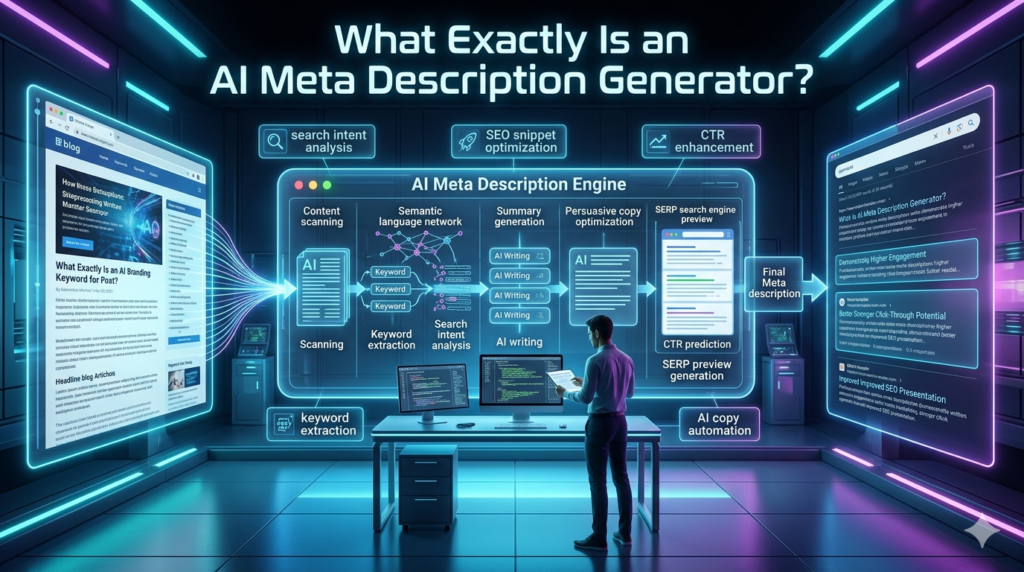
At its core, an AI meta description generator is a tool that automatically creates the short snippet of text you see beneath a webpage title in search engine results. You feed it a URL, a target keyword, or a brief topic summary, and it produces a ready to use description usually within seconds. Tools like Jasper, Surfer SEO, Hares’ built-in generator, and various free options from platforms like Shopify or Mangolds have made this process almost frictionless.
Some integrate directly into content management systems, so you never even have to leave WordPress.The concept isn’t new. SEO professionals have long used templates and formulas. What’s changed is the intelligence behind the output. Modern generators don’t just stuff keywords into a sentence they analyze search intent, competitor snippets, and even emotional triggers to produce something that reads more naturally.
Why Meta Descriptions Still Matter in 2026
Let’s address the elephant in the room first. Google has said repeatedly that meta descriptions aren’t a direct ranking factor. So why bother? Because they’re a click-through factor. And click-through rate absolutely influences how your page performs over time. I worked with a mid-size e-commerce brand last year that had solid rankings but disappointing organic traffic. When we audited their pages, nearly 60% had either missing or auto generated meta descriptions that made zero sense.
We rewrote about 200 of them some manually, some using an AI generator as a starting point and within eight weeks, their average CTR across those pages jumped by roughly 22%. That’s not a miracle. That’s just giving people a reason to click.
How These Tools Actually Work
Most AI meta description generators rely on large language models trained on massive datasets of web content. When you input a topic or URL, the tool identifies relevant entities, search intent patterns, and high-performing competitor descriptions. It then synthesizes something that balances SEO requirements with human readability. The better tools let you adjust tone professional, casual, urgent, playful. Some let you specify a call to action.
A few even pull real-time SERP data to ensure your description stands out against what’s currently ranking. I’ve noticed the strongest results come from tools that give you multiple options rather than a single output. When I get three or four variations, I can cherry-pick the best phrasing from each and create something that feels genuinely tailored.
Where AI Generators Fall Short
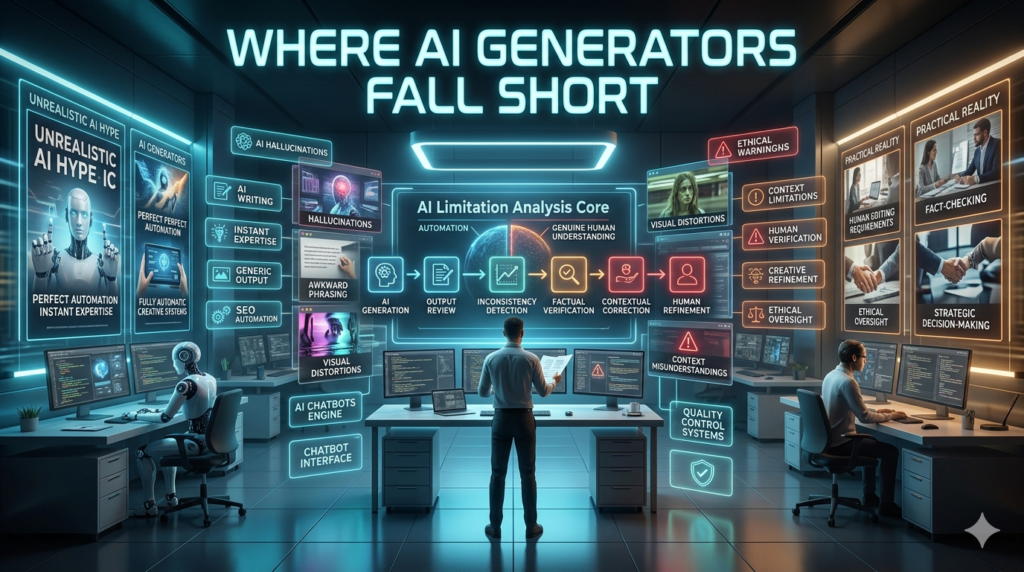
Here’s where I push back on the hype. AI-generated meta descriptions are a solid draft, not a finished product. I’ve seen them produce technically accurate but emotionally flat copy. I’ve also caught tools generating descriptions that were slightly misleading promising content the page didn’t fully deliver, which is a fast track to higher bounce rates. There’s also the duplicate content risk.
If your competitors use the same tool with similar inputs, you might end up with eerily similar meta descriptions. Google won’t penalize you for it, but your snippet will blend into the noise instead of standing out. My rule of thumb: use the AI output as a foundation, then edit it with your brand voice and a clear understanding of what makes your specific page valuable. Spend an extra 30 seconds per description. It compounds.
Real-World Best Practices
From hundreds of tests across different industries, here’s what consistently works:
Keep it between 120 and 155 characters. Anything longer gets truncated, and the most compelling part of your message might get cut off.
Front-load the value proposition. Don’t bury the hook. If your page solves a specific problem, say so immediately.
Include a soft call to action. Phrases like Learn how, Discover, or See the difference give readers a nudge without sounding pushy.
Match search intent precisely. If someone searches best budget running shoes, your description better talk about budget running shoes not your brand history.
Avoid quotation marks. They often get truncated in SERPs and can break the visual flow of your snippet.
The Honest Bottom Line
AI meta description generators are genuinely useful tools for SEO professionals, content marketers, and small business owners who are stretched thin. They eliminate the blank page problem and produce serviceable copy in seconds. But they’re not a replacement for human judgment. The best performing meta descriptions I’ve written or edited always had a human touch.
A small detail that showed I understood the reader’s problem. A specific number or benefit that built instant credibility. A tone that matched the brand, not just the keyword. Use the technology. Save the time. But never outsource the final click to a machine.
FAQs
Q: Are AI meta description generators free to use?
A: Many offer free versions with basic functionality. Tools like Mongols and some CMS plugins provide free generators, while premium platforms like Jasper or Surfer SEO charge monthly subscriptions for advanced features.
Q: Can Google detect AI-written meta descriptions?
A: There’s no evidence that Google specifically penalizes AI-generated meta descriptions. Google evaluates the quality and relevance of the snippet, not how it was created.
Q: How many characters should a meta description be?
A: Aim for 120 to 155 characters, including spaces. This range avoids truncation in most search results while giving you enough room to convey value.
Q: Should I use the same meta description across multiple pages?
A: No. Each page should have a unique meta description that reflects its specific content and target keyword. Duplicate descriptions reduce your ability to stand out in search results.
Q: Do meta descriptions affect search rankings directly?
A: No, meta descriptions are not a direct ranking factor. However, they significantly impact click-through rates, which can indirectly influence your page’s performance in search results over time.