
I’ve been working in digital marketing for over a decade, and I can tell you that backlink building has always been one of the most labor-intensive parts of SEO. When AI powered backlink tools started emerging a few years ago, I was honestly skeptical. Could a machine really understand the nuances of relationship building and editorial outreach? After testing dozens of these platforms and watching the industry evolve, I’ve developed a pretty grounded perspective on what these tools can and can’t do.
Understanding What AI Backlink Tools Actually Do
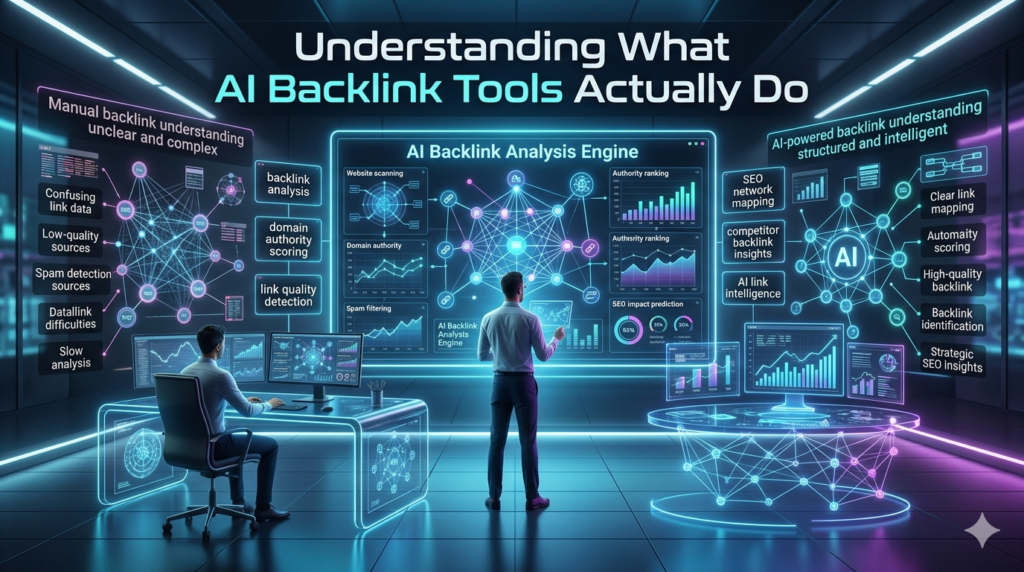
Let me clear up some confusion first. When we talk about AI backlink tools, we’re usually referring to software that uses machine learning and natural language processing to help with various aspects of link building from finding prospects to analyzing link quality and even drafting outreach emails. These aren’t magic buttons that automatically generate high quality backlinks (anyone promising that is selling snake oil). Instead, they’re sophisticated assistants that can dramatically speed up the research and analysis portions of link building while still requiring human judgment for the relationship building aspects.
I remember spending entire afternoons manually combing through competitor backlink profiles in Ahrefs, copying URLs into spreadsheets, and cross-referencing domain authorities. Tools with AI capabilities now do this in minutes, but the real value isn’t just speed—it’s pattern recognition at a scale humans can’t match.
The Tools That Have Actually Earned Their Keep
Through hands-on testing, a few platforms have consistently delivered value. Pitch box and Buzz Stream integrated AI features for personalizing outreach at scale, learning from your successful pitches to improve future ones. I’ve seen open rates jump from around 18% to nearly 35% after these systems learned our voice and what resonated with different types of publishers. Link Hunter, which uses AI to find unlinked brand mentions, saved one of my clients countless hours. Their brand was mentioned in about 47 articles over six months without a link. The AI scanned the web continuously, flagged these opportunities, and even suggested personalized outreach angles based on the context of each mention.
We converted roughly 60% of those into actual backlinks low hanging fruit we’d have missed otherwise. For competitive analysis, tools like SEMrush and Mos. have incorporated machine learning algorithms that don’t just show you competitor backlinks but identify patterns in their link acquisition strategies. I worked with an e-commerce client where the AI spotted that our competitors were systematically getting links from roundup posts published in Q4. We adjusted our outreach calendar accordingly and saw a 40% increase in successful placements during that period.
The Reality Check: What AI Can’t Replace
Here’s where I need to be straight with you AI backlink tools have significant limitations that marketers sometimes gloss over in their enthusiasm.
First, relationship building remains fundamentally human. I’ve tested AI-generated outreach emails that were grammatically perfect and even personalized with the recipient’s name and recent articles. They still felt off. Experienced editors can smell a templated pitch from a mile away, no matter how cleverly the AI varied the sentence structure.
Second, AI tools can’t yet reliably judge true editorial quality versus manipulated metrics. I’ve seen platforms recommend sites with decent domain authority that turned out to be thinly-veiled link farms. The AI looked at quantitative signals but missed the qualitative reality that the content was garbage and the site had been penalized before.
You still need human editorial judgment. I always manually review targets, especially checking if real humans would actually read the site and if the content adds genuine value.
Practical Implementation: How I Actually Use These Tools
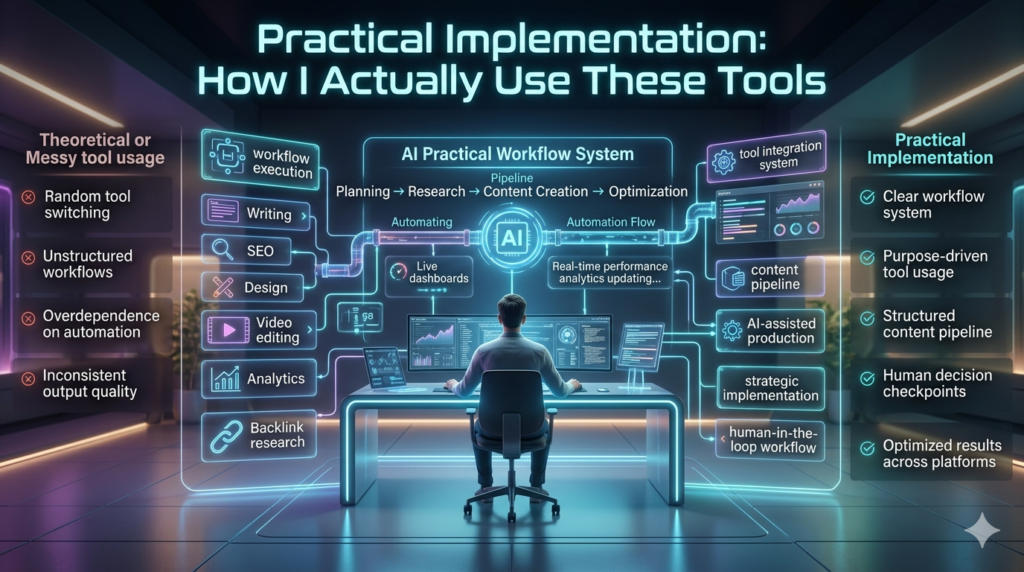
My workflow has evolved into a hybrid approach that maximizes AI efficiency while preserving human insight. I start with AI powered competitor analysis to identify link gap opportunities pages where competitors have backlinks but we don’t. The AI processes this quickly and ranks opportunities by potential impact. Next, I use AI for scale prospecting, but with strict filters. I’m looking for sites in our niche with genuine traffic (not just good metrics), recent publication activity, and content that actually relates to what we’re pitching.
For outreach, I let AI generate first drafts and subject line variations for A/B testing. Then I personally rewrite at least 40% of each email, adding specific observations about their content or genuine connections to our pitch angle. The AI handles follow ups based on engagement signals if someone opened but didn’t respond, it suggests a different angle. If they didn’t open at all, it might test a new subject line. This systematic testing would be impossible manually.
Cost Considerations and ROI
These tools aren’t cheap. Quality AI backlink platforms typically run $200-$500 monthly for small operations, scaling up significantly for agencies or enterprises. I’ve paid over $800 monthly for comprehensive access during intensive campaigns. Is it worth it? Depends entirely on your scale and alternative costs. If you’re building links for a single small business site and can dedicate personal time, you might not need AI-powered tools yet. Manual research with free tools could suffice. But if you’re managing multiple clients or running an in-house SEO team, the time savings alone justify the investment.
What used to take a junior SEO 20 hours of research now takes 2-3 hours with AI assistance, freeing them for higher-value relationship building and content strategy. I calculated ROI for one mid-sized client: we spent $450 monthly on tools but reduced research time by approximately 15 hours weekly. At even a modest billing rate, that’s $2,400+ in reclaimed time monthly, not counting the improved targeting quality that increased our conversion rate on outreach.
Ethical Considerations Nobody Talks About
We need to address the elephant in the room the line between AI-assisted efficiency and manipulative automation. Google’s guidelines are clear: link schemes designed to manipulate rankings violate their policies. Using AI to mass-blast generic outreach to thousands of sites hoping for a few bites? That’s essentially spam, and it damages the web ecosystem. I’ve seen marketers use AI to scrape contact information and send completely irrelevant pitches at massive scale.
It burns your brand reputation and makes legitimate outreach harder for everyone when editors become jaded. The ethical use, in my view, is employing AI for research and personalization assistance while maintaining genuine human intent and value exchange. Every link you pursue should offer real value to the linking site’s audience AI should help you identify and communicate that value, not circumvent the need for it.
The Future Trajectory
AI backlink tools are getting better at understanding context and quality signals. Natural language models are improving at drafting truly personalized outreach that doesn’t sound robotic. Pattern recognition is getting sophisticated enough to predict which link opportunities have the highest success probability based on hundreds of variables. But I don’t see AI completely replacing human link builders anytime soon.
The best outcomes will continue coming from augmented intelligence humans making strategic decisions enhanced by AI’s computational power and pattern recognition. What I do expect is that basic link building will become table stakes as AI makes it more accessible. Competitive advantage will shift even more toward creative strategy, genuine relationship building, and producing content that naturally attracts links because it genuinely deserves them.
FAQs
Q: Are AI backlink tools worth it for small businesses?
A: If you’re just starting out with basic SEO needs, probably not yet. Focus on free or low cost manual methods first. Once you’re building links regularly for multiple pages or sites, the time savings justify the investment.
Q: Can AI backlink tools get you penalized by Google?
A: The tools themselves won’t, but how you use them can. If you use AI to spam or manipulate link schemes, you risk penalties. Use AI for research and efficiency, not to bypass quality standards.
Q: What’s the best AI backlink tool overall?
A: There’s no single best it depends on your needs. SEMrush and Ahrefs excel at analysis, Pitch box at outreach management, and specialized tools like Link Hunter for mention monitoring. Most pros use a combination.
Q: How much time do AI backlink tools actually save?
A: In my experience, 60-70% time savings on research and analysis tasks, but minimal savings on relationship building itself. Expect to reclaim 10-15 hours weekly if you’re doing link building full time.
Q: Do you still need manual link building with AI tools?
A: Absolutely. AI handles data processing and pattern finding brilliantly but can’t replace human judgment on quality, relationship building, or creative outreach strategies. The best approach combines both.