
The digital landscape is a constantly shifting terrain, and nowhere is this more apparent than in the realm of organic search. For years, as a practitioner deeply entrenched in content and search strategy, I’ve watched, adapted, and contributed to the evolution of how we understand what people are actually looking for online. What we once called keyword research has undergone a profound transformation, moving far beyond simply identifying popular search terms to a more sophisticated, almost intuitive understanding of user intent and semantic relationships. Today, we’re leveraging advanced analytical capabilities that have fundamentally reshaped how we approach content creation.
Gone are the days when keyword research was primarily a manual slog through spreadsheets, chasing volume metrics with little regard for nuance. While those foundational principles remain vital, the scale and depth of analysis possible now are simply astounding. We’re no longer just looking at individual words; we’re dissecting entire topics, understanding the intricate web of related queries, and anticipating user needs with a precision that was once unimaginable. It’s about moving from basic keyword matching to intelligent keyword analysis a paradigm shift driven by sophisticated algorithms and vast datasets.
Unpacking the Nuance: Beyond Simple Search Terms
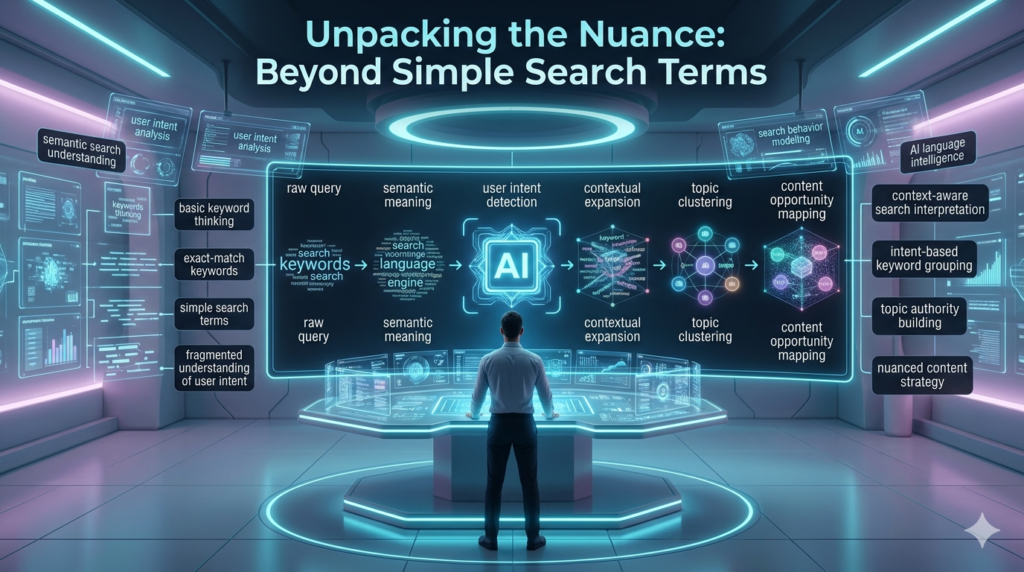
At its heart, this advanced approach to keyword research is about understanding intent. A high search volume keyword is meaningless if you don’t grasp what the user hopes to achieve by typing it into a search engine. Is someone looking to buy? To learn? To navigate to a specific website? Intelligent systems now excel at sifting through millions of queries, analyzing not just the words themselves but also the patterns of user interaction, the types of content ranking for those terms, and even the historical performance of different content formats. For instance, consider the term best coffee maker. A traditional analysis might show high search volume.
But an intelligent system will differentiate between someone researching best coffee maker for espresso (likely an informational or research driven query, seeking reviews and comparisons) and buy Nespresso machine online (a clear transactional intent). This distinction allows content strategists to craft highly targeted content a comprehensive buyer’s guide for the former, and a product page optimized for conversion for the latter. This level of granular understanding ensures every piece of content serves a specific purpose, directly addressing a user’s need.
The Power of Semantic Grouping and Topical Authority
One of the most impactful shifts I’ve observed is the move from individual keyword targeting to building out comprehensive topical authority. Rather than optimizing a page for just one or two keywords, advanced analytical platforms help us identify entire clusters of semantically related terms. These systems can map out a topic graph, showing how various subtopics and questions relate to a broader subject. Imagine you’re writing about sustainable gardening. Instead of just finding keywords like organic gardening tips or eco-friendly plants, an intelligent analysis will reveal an ecosystem of related queries: composting for beginners, rainwater harvesting systems, DIY pest control natural, soil health improvement, and so on.
This isn’t just a list; it’s a structured understanding of how users explore a topic. This insight empowers us to create comprehensive content hubs, interlinking articles and building genuine authority on a subject, which search engines increasingly reward. It ensures we don’t inadvertently create competing pages for similar terms (keyword cannibalization) and that we cover a topic exhaustively.
Dissecting the SERP and Anticipating Trends
Another critical dimension is the ability of these sophisticated systems to dissect Search Engine Results Pages (SERPs) with unparalleled detail. They don’t just tell you who ranks; they tell you how they rank. What types of content are appearing? Are there featured snippets, video carousels, ‘People Also Ask’ boxes, or image packs? This detailed SERP analysis helps us understand the preferred content format and structure for specific queries, giving us a roadmap for our own content. Furthermore, these platforms excel at competitive intelligence. They can analyze competitor’s content strategies at scale, identifying their top-performing topics, the gaps in their coverage, and the keywords they’re targeting effectively.
This provides a strategic advantage, allowing us to pinpoint opportunities where we can outmaneuver rivals by offering superior, more comprehensive, or more user-friendly content. Beyond current trends, the predictive capabilities of these systems are opening new doors. By analyzing vast historical data and identifying emerging patterns, they can help forecast future search trends. This means we can often spot rising niches or anticipate shifts in user interest before they become mainstream, positioning ourselves as early authorities in burgeoning fields. I’ve personally seen this lead to significant gains in organic traffic for clients who were willing to act on these forward-looking insights.
The Indispensable Human Touch

Despite the incredible power of these analytical advancements, it’s absolutely crucial to remember that they are tools, not replacements for human intellect and creativity. The data these sophisticated systems provide is invaluable, but it still requires a skilled human strategist to interpret it, to connect the dots, and to translate raw insights into actionable content plans. I’ve learned this firsthand: it’s tempting to become overly reliant on automated reports. One time, a system flagged a set of keywords as high opportunity, but upon closer human review, we realized the intent was deeply nuanced, tied to a very specific, short lived cultural moment. Without that human filter, we might have invested heavily in content that quickly became irrelevant.
Systems can sometimes miss cultural subtleties, emerging slang, or completely novel concepts that haven’t yet generated enough data for them to recognize. Our role as strategists is to add the layer of empathy, ethical consideration, and creative vision. We must ask: Does this data align with our brand voice? Does it genuinely serve our audience? Is there a better, more unique way to approach this topic that the data alone might not suggest? The garbage in, garbage out principle still applies if the foundational data or the interpretation is flawed, even the most advanced analysis won’t yield successful results.
Moving Forward with Smarter Content Strategies
The integration of advanced analytical methods into keyword research has unequivocally elevated the sophistication of content marketing. It allows us to move beyond guesswork and operate with data-driven precision, ensuring our content truly resonates with search intent and builds enduring topical authority. For any business serious about its digital presence, embracing this evolution isn’t optional; it’s essential. It means investing not just in the right platforms, but also in the strategic thinking required to leverage their full potential.
The future of content strategy isn’t about robots writing content (at least not yet!), but about empowering human strategists with unprecedented insights to create more valuable, more relevant, and more impactful experiences for users worldwide. It’s a thrilling time to be building and optimizing content, blending cutting edge analysis with timeless human ingenuity.
FAQs
Q: What is the biggest difference between traditional and modern keyword research?
A: Traditional keyword research focused primarily on individual keyword volume and difficulty. Modern (or intelligent) keyword research goes deeper, prioritizing search intent, semantic relationships, topical authority, and comprehensive SERP analysis.
Q: How do advanced systems identify search intent?
A: They analyze millions of queries, user behavior patterns, the types of content that rank for those terms, and historical data to understand whether a user is looking to learn, buy, navigate, or perform an action.
Q: What is “topical authority” and why is it important?
A: Topical authority is establishing your website as a comprehensive and trusted resource on a specific subject by covering all its related subtopics in depth. Search engines reward this with higher rankings and visibility because it genuinely serves user needs better.
Q: Can these advanced tools predict future trends?
A: Yes, by analyzing vast historical data and identifying emerging patterns, sophisticated systems can offer insights into rising niches and potential shifts in search behavior, helping content creators anticipate future demand.
Q: Does this mean human keyword researchers are becoming obsolete?
A: Absolutely not. While advanced systems handle data processing and pattern recognition at scale, human expertise is crucial for interpreting insights, adding strategic nuance, ensuring ethical considerations, and applying creative judgment to content strategy. They are powerful tools that augment, rather than replace, human strategists.