
I still remember the late Tuesday night I decided to test out an AI script generator. The deadline was hanging over my head like a storm cloud, and the blank screen in front of me wasn’t just intimidating; it felt personal. I’d been wrestling with a six-minute explainer video for a client, stuck on the second act. That’s when I typed the first prompt into a new platform promising to handle the heavy lifting. The result came back in seconds. Grammatically perfect. Structurally sound. And completely soulless.
If you’re reading this, you’ve probably heard the buzz. Everywhere I look in the creator economy, people are singing praises of automated writing tools. As someone who has written thousands of scripts for YouTube, corporate training, and independent film over the last decade, I feel compelled to give you the unvarnished truth about where an AI script generator actually fits in your workflow and where it falls flat.
The Good: Speed Over Perfection
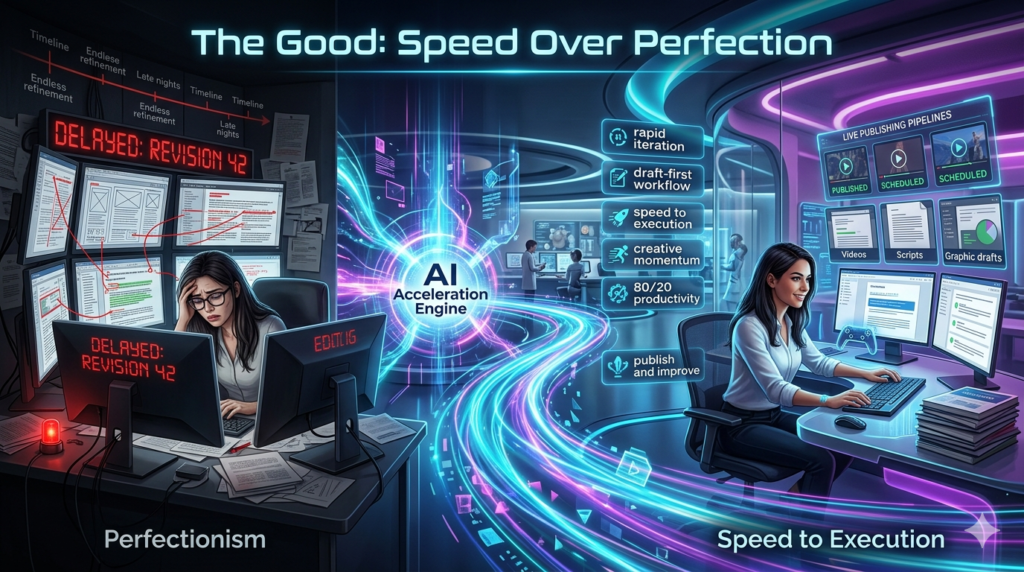
Let’s get the obvious out of the way. These tools are incredible for breaking inertia. When I’m working on a batch of social media shorts, I don’t always have time to brainstorm from scratch. An AI writing assistant can spit out ten variations of a hook in the time it takes me to brew a cup of coffee. For example, recently I needed a script for a series of LinkedIn educational posts. I fed the tool some rough bullet points about project management methodologies.
Within minutes, it organized those thoughts into a coherent narrative with a clear Call-to-Action (CTA). It didn’t win any literary awards, but it saved me about forty-five minutes of structuring work. That time allowed me to focus on refining the visuals and recording a warmer delivery. In that sense, think of these generators not as authors, but as extremely fast junior interns. They take dictation well, but they need direction.
The Bad: The Hallucination of Personality
Here is where my experience gets complicated. While language models have improved exponentially in recent years, they struggle with authentic voice. They tend to default to safe language. If you ask for a funny script, you often get puns instead of humor. If you ask for emotional storytelling, you usually get melodrama. I once tested a tool on a documentary style project about local farming. The output was factually accurate regarding crop yields but utterly devoid of the grit and smell of the soil. It sounded like a wiki page, not a story.
A good screenwriting software needs to understand subtext the thing said versus the thing meant. Currently, AI is notoriously bad at understanding nuance. It predicts the next word based on probability, not feeling. When I used the raw output for a client pitch, the feedback was blunt: It doesn’t sound like us. The tone was too polished, too corporate. We ended up rewriting eighty percent of it anyway. This happens more often than marketers admit. You save time at the start, only to spend double the time scrubbing the robotic edge off the final draft.
Finding the Sweet Spot
So, is there value here? Absolutely. But you have to change how you approach the prompt. Most people treat the generator like a search engine, asking for a script about weight loss tips. That yields generic garbage. To get usable results, you need to treat the AI like a collaborator who knows nothing about your brand. I now upload style guides, past successful transcripts, and tone references before generating anything. I ask for outlines rather than full scripts.
For instance, instead of requesting a full two-minute video script, I might ask for three potential angles on a specific topic. Once I pick the best angle, I hand code the transitions and the emotional beats myself. This hybrid approach leverages the machine’s speed while keeping the human spark alive. It’s crucial for maintaining your unique content creation identity.
Ethical Considerations and Audience Trust
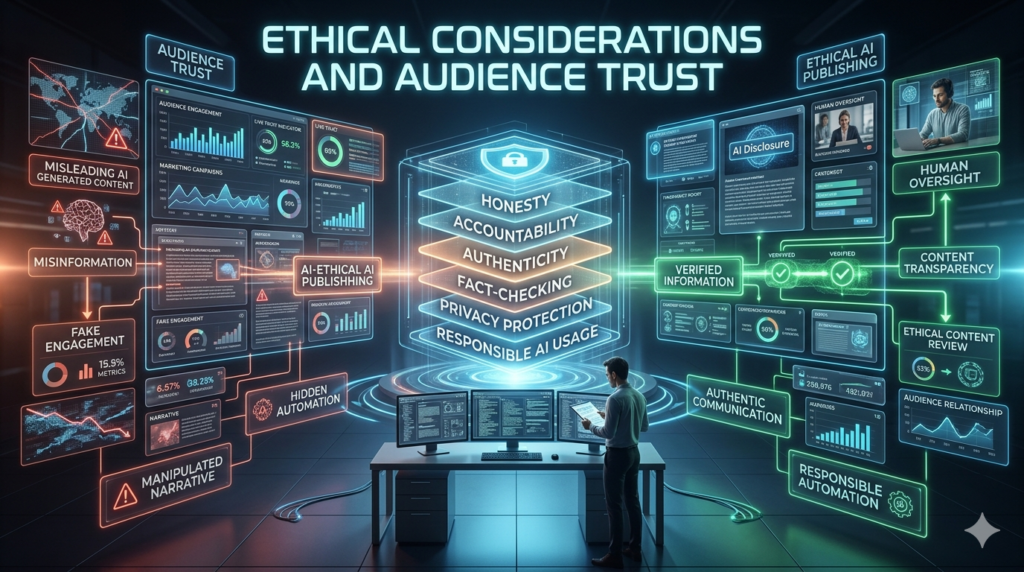
There is also a layer of responsibility we have to consider. Viewers aren’t stupid. They can tell when something reads like it was mass produced. There is a distinct rhythm to human speech pauses, filler words, intentional imperfections that creates rapport. AI scripts often lack this cadence because they prioritize grammatical correctness over spoken flow.
If you rely too heavily on these tools without reviewing them, you risk alienating your audience. Authenticity is a currency in the digital age. Using an automated scripting tool is fine, provided it remains behind the scenes. Don’t let the algorithm dictate your message. Your values, your ethics, and your perspective are what keep people coming back.
The Future of Writing Assistants
The technology is moving fast. Within a year or two, we’ll likely see tools that can analyze your previous audio recordings and mimic your cadence perfectly. But until then, the bottleneck isn’t writing; it’s thinking. Don’t use an AI script generator to replace your critical thinking skills. Use it to amplify them. The danger lies in becoming passive, letting the software drive the narrative arc. The best creators I know use these tools to throw spaghetti at the wall, then wipe their own feet cleaning it up.
If you are just starting out, these tools can bridge the gap between idea and execution. They help you overcome the fear of the empty page. But if you want to build a lasting legacy or a deeply connected community, the human touch remains non-negotiable. At the end of the day, the script is just a blueprint. The performance, the editing, and the intent are what make the video sing. Use the tech wisely, keep your standards high, and never stop polishing the rough edges.
FAQs
Q: Is using an AI script generator considered cheating?
A: No, it’s a tool. Just like a spellchecker or a camera tripod. It becomes unethical only if you claim the ideas were originally yours without editing or disclosing significant reliance on automation in regulated industries.
Q: Can an AI generate a full movie script?
A: Technically yes, but the quality usually suffers in terms of character development and pacing. Industry professionals currently use them for brainstorming, not final production.
Q: Which type of content benefits most from these tools?
A: Explainer videos, listicles, and short-form social media content benefit the most because they rely on structure rather than deep emotional arcs.
Q: Do I need coding skills to use an AI script generator?
A: No. Most platforms operate on natural language prompts. The more clearly you describe your goal, the better the output.
Q: Will AI replace human writers?
A: It will replace inefficient workflows, but not writers. Writers who adapt to using these tools to enhance their productivity will thrive, while those who ignore the shift may struggle to keep up.