
Remember the early days? When scrappy meant your co founder was also the customer support lead, the bookkeeper, and the social media manager? When leveraging technology meant mastering a spreadsheet that didn’t crash when you added a new column? Those days aren’t gone, but they’ve gotten a powerful, invisible upgrade. The new co founder isn’t a person with a hoodie and a coffee habit; it’s a suite of intelligent tools that work while you sleep, think, and build. I’ve spent the last decade in the trenches with startups from pre-seed garage operations to Series B scale ups and the most significant shift I’ve witnessed isn’t a new funding model or a viral marketing hack.
It’s the quiet, pervasive integration of artificial intelligence into the daily fabric of building a company. This isn’t about replacing the founder’s vision; it’s about amplifying it, automating the mundane, and illuminating the path forward with data-driven clarity. Let’s cut through the noise and talk about the real, tangible AI tools for startups that are changing the game right now.
Beyond the Buzzword: What “AI for Startups” Actually Means Today
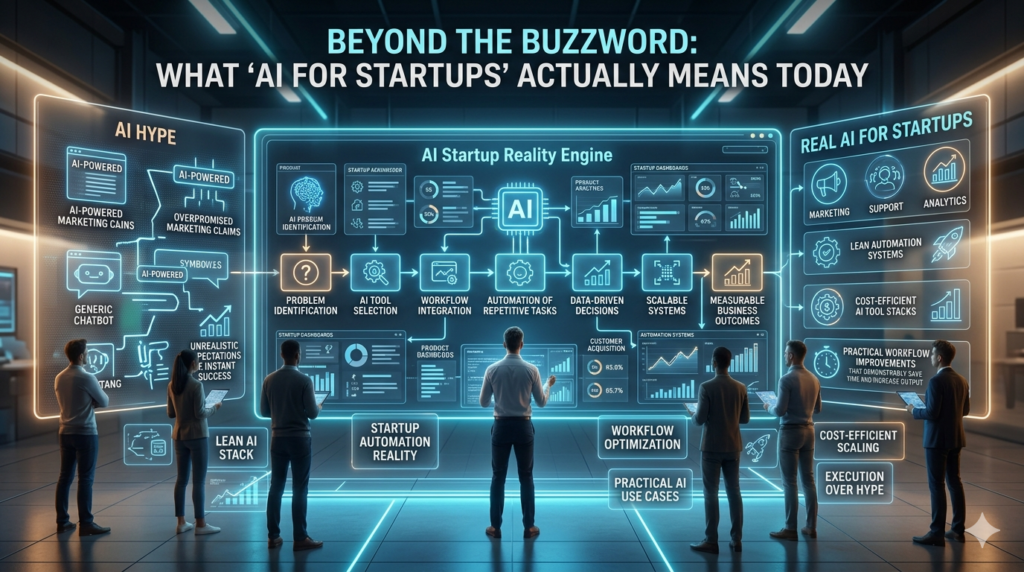
When we say “AI,” we’re not talking about sentient robots demanding equity. We’re talking about practical, accessible software that uses machine learning to perform tasks that traditionally required human intelligence: understanding language, recognizing patterns, making predictions, and generating content. For a startup, this translates to a digital Swiss Army knife. It’s the difference between manually sorting through a thousand sign-ups to find your most engaged users, and having an AI CRM that automatically scores and segments them for you.
It’s the gap between staring at a blank Google Doc for an hour and using an AI writing assistant to draft a first-pass blog post, a cold email sequence, or a product description in minutes. The magic isn’t in any single tool; it’s in the ecosystem they create. A founder can now, with a small team, execute with a speed and sophistication that was previously impossible.
The Operational Backbone: AI That Runs the “Boring” Stuff
Every startup founder knows that 80% of the job is managing the invisible machinery: scheduling, invoicing, data entry, and customer service triage. This is where AI has made its most profound, behind the scenes impact.
Intelligent CRMs and Sales Assistants: Tools like HubSpot (with its robust AI layers) and Salesforce Einstein are no longer just contact databases. They predict which leads are most likely to close based on interaction patterns, suggest the next best action for a sales rep, and even draft personalized follow up emails. For a startup, this means a single founder can manage a sales pipeline that would have required a full team a decade ago.
Automated Financial Ops: Platforms like Brex and Ramp use AI to categorize expenses, flag anomalies, and even negotiate vendor contracts on your behalf. QuickBooks now offers AI-powered cash flow forecasting, giving you a realistic view of your runway weeks or months in advance a critical lifeline for any early stage company.
Smart Customer Support: This is a game changer. Intercom and Zendesk leverage AI chatbots that don’t just answer FAQs; they understand context, route complex issues to the right human, and learn from every interaction. The result? 24/7 support that feels personal, without the 24/7 payroll.
The Creative Engine: AI as Your Collaborative Thought Partner
The myth that AI stifles creativity is just that a myth. The most effective use I’ve seen is treating AI as a brainstorming buddy, a first-draft generator, and an editor all in one.
Content Creation & Marketing: Jasper and Copy.ai can generate blog post outlines, social media captions, and ad copy based on a few keywords. Canva’s Magic Design tool can turn a simple text prompt into a suite of branded graphics. This doesn’t replace a skilled marketer; it eliminates the blank-page paralysis and handles the repetitive variations, freeing the human to focus on strategy and brand voice.
Product Development & UX: AI-powered analytics tools like Mixpanel and Amplitude now offer predictive insights. They can tell you not just what users are doing in your app, but why they might be churning, often before the churn happens. Figma plugins use AI to suggest design improvements, generate placeholder images, and even write micro copy for buttons. It’s like having a junior designer and a UX researcher on call.
The Strategic Mind: AI for Better Decisions, Faster
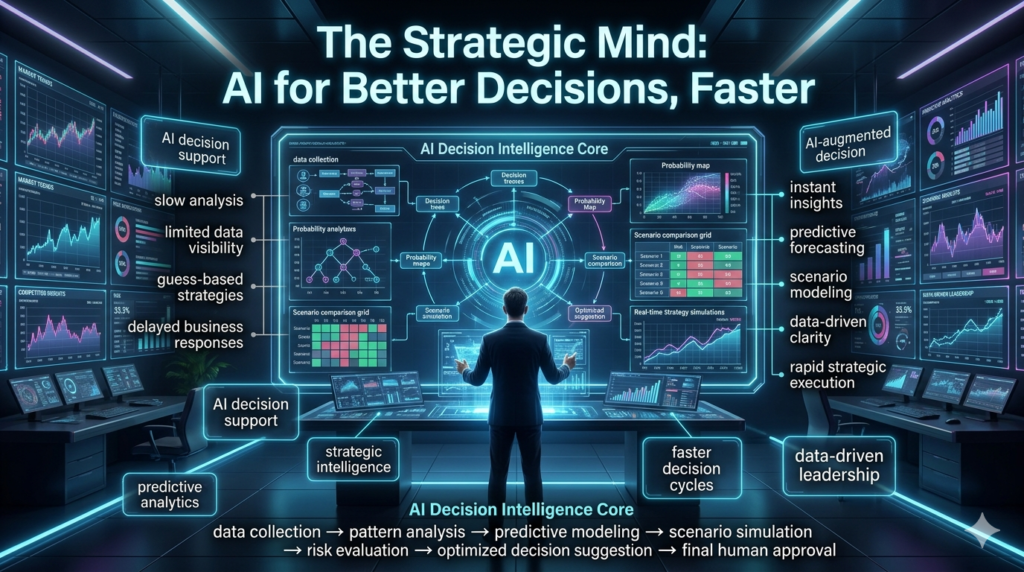
Perhaps the most valuable contribution of AI is in the realm of strategic decision making, where gut instinct meets data-driven validation.
Market Intelligence & Competitive Analysis: Tools like Crayon and Compute use AI to track competitors’ digital footprints new features, pricing changes, marketing campaigns and deliver actionable summaries. For a startup, staying ahead of the competitive curve no longer requires a dedicated analyst; it’s automated.
Talent Acquisition: Lever and Greenhouse now use AI to screen resumes for relevant skills and experience, reducing bias in the initial sift and ensuring you spend time with the most promising candidates. Some tools even analyze communication patterns to predict candidate success in a specific role’s culture.
Personalized User Experiences: AI allows for hyper personalization at scale. Dynamic Yield (now part of McDonald’s) and Optimizely use machine learning to tailor website experiences, app interfaces, and email content to individual user behavior in real-time. A startup can make every user feel like the product was built just for them.
The Real Talk: Limitations, Ethics, and the Human-in-the-Loop
This isn’t a utopian vision. Integrating AI comes with serious considerations that every responsible founder must address.
Cost vs. ROI: Many powerful AI tools are subscription-based and can get expensive. A startup must rigorously track the time saved or revenue generated to justify the cost. It’s easy to subscribe to ten tools and see no net benefit.
Data Privacy and Security: Feeding customer data into a third party AI platform is a non trivial risk. You must vet vendors for SOC 2 compliance, understand where data is stored, and be transparent with your users. The penalty for a breach is existential for a young company.
The “Black Box” Problem: Sometimes, AI makes a decision you can’t explain (e.g., why a loan application was denied). For critical business functions, you need tools that offer transparency and allow for human override. Blind trust in an algorithm is a dangerous path.
Over-Automation and Loss of Soul: There’s a fine line between efficiency and sterility. An AI-generated customer service reply that lacks empathy can do more harm than a slightly slower human response. The goal is augmentation, not automation of everything human.
The Future is Collaborative (And It’s Already Here)
The most successful startups I see today aren’t the ones with the most advanced AI, but the ones with the most thoughtful integration. They use AI to handle the predictable, so their team can focus on the profound. They let the machine analyze the data, so the humans can ask better questions. They use AI to draft the email, so the founder can spend an extra hour talking to a customer.
This is the new baseline. In five years, not leveraging these tools won’t be a philosophical choice; it will be a competitive disadvantage so severe it will look like running a marathon in flip flops. The revolution isn’t coming it’s in your browser tabs, your project management software, and your CRM right now. The question isn’t if you should adopt these tools, but how you can do it wisely, ethically, and in a way that lets your startup’s unique human spirit shine brighter than ever.
FAQs
Q: Do I need a technical co-founder to implement AI tools in my startup?
A: Absolutely not. The beauty of today’s AI landscape is its accessibility. Most tools are designed for non technical users with intuitive interfaces and no code setups. Your priority should be identifying a painful workflow and finding the AI tool that solves it, not building an AI model from scratch.
Q: How much should a bootstrapped startup realistically budget for AI tools per month?
A: It varies wildly, but a focused startup could start with $200-$500/month by strategically combining tools (e.g., one for CRM, one for content, one for design). The key is to start small, measure the impact on a single process, and expand from there. Many tools offer significant startup discounts.
Q: Will AI tools make my team lazy or replace them?
A: They will make your team more effective. The goal is to eliminate tedious, low-value work (data entry, basic reporting, first draft writing) so your talented people can focus on high-value, creative, and strategic work that requires human judgment, empathy, and innovation. The role evolves, it doesn’t disappear.
Q: What’s the single most impactful area to apply AI first?
A: For most startups, customer support and sales triage offers the fastest, most measurable ROI. Freeing up 10-15 hours a week from repetitive inquiries allows your team to focus on closing deals and building customer relationships, directly impacting revenue and retention.