
I remember the days when the red squiggly line in Microsoft Word was the ultimate authority on my writing. If it didn’t underline a word, I assumed I was golden. Fast forward to a decade of professional writing, and I’ve learned the hard way that a spell-checker is a blunt instrument, while modern grammar technology has become something closer to a surgical laser. We have moved past the era of simple find and replace.
Today, AI grammar checkers are woven into the fabric of our digital lives, sitting quietly in our browsers, email clients, and Slack channels. But as someone who lives and breathes syntax, I’ve found that these tools are a double edged sword. They can turn a messy draft into a polished gem, or they can strip the soul out of a unique voice if you aren’t careful.
The Evolution of the Digital Editor
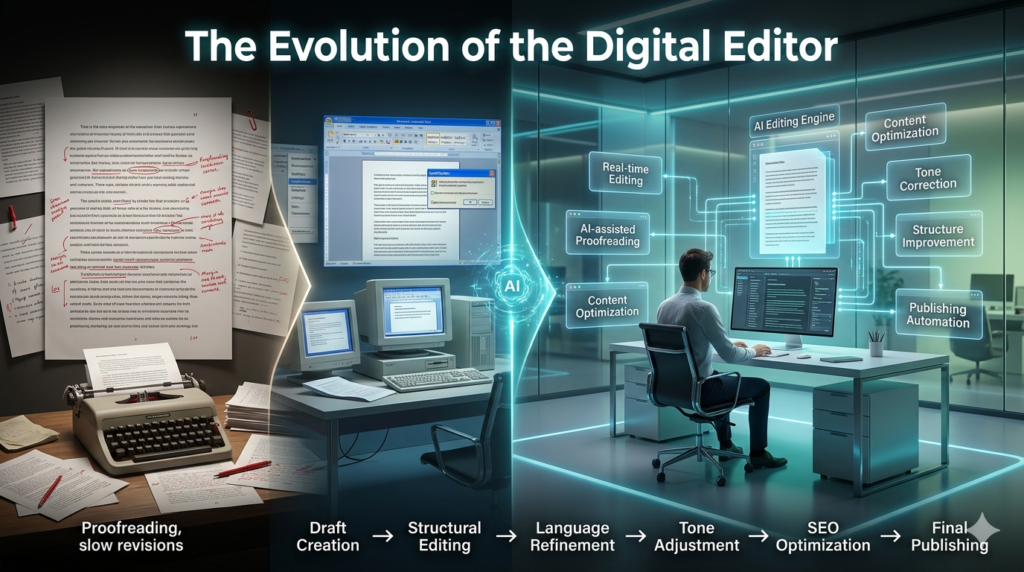
To understand where we are, you have to look at how far we’ve come. Early grammar tools operated on rigid, rule-based systems. If “A” happened, suggest “B.” They struggled with context. They would flag their versus there, but they couldn’t tell you if your tone was too aggressive for a corporate memo or too dry for a blog post. Modern AI grammar checkers utilize Natural Language Processing (NLP) and deep learning.
They don’t just look at words; they look at the relationship between words. They analyze the vector of a sentence its direction, its weight, and its intent. This is why a tool can now tell you that a sentence is grammatically correct but hard to read. It’s no longer about following the laws of the English language; it’s about the psychology of communication.
Why We Use Them (and Why We Should)
Even the best writers have blind spots. When you’ve been staring at a 3,000-word white paper for six hours, your brain starts to fill in the gaps. You see the word the twice in a row, but your mind skips the second one because it knows what you meant to write. This is where the AI shines. It is an tireless, objective second pair of eyes.
- Consistency: It catches when you capitalize a product name on page one but leave it lowercase on page ten.
- Clarity: It identifies the passive voice trap. While passive voice isn’t technically a grammatical error, it’s often a stylistic one that weakens your message.
- Efficiency: It saves hours of manual proofreading, allowing writers to focus on the high level strategy the what while the tool handles the how.
The “Homogenization” Trap: A Word of Caution
Here is the perspective you won’t often find in a marketing brochure for these tools: AI grammar checkers have a tendency to make everyone sound the same. These algorithms are trained on vast datasets of standard English. Because of this, they often suggest changes that favor a middle-of-the-road, safe, and somewhat sterile prose style. If you are writing a technical manual, that’s perfect. If you are writing a persuasive op-ed, a poetic essay, or a brand voice that’s supposed to be edgy or “conversational,” the AI might actually steer you toward mediocrity.
I’ve seen writers lose their spark because they accepted every suggestion the software threw at them. They ended up with a piece that was technically perfect but utterly forgettable. Real human communication often involves breaking rules for emphasis. It involves fragments. It involves starting sentences with “And” or “But” to create a rhythmic flow. A machine sees a rule violation; a writer sees a stylistic choice.
Choosing the Right Tool for the Job
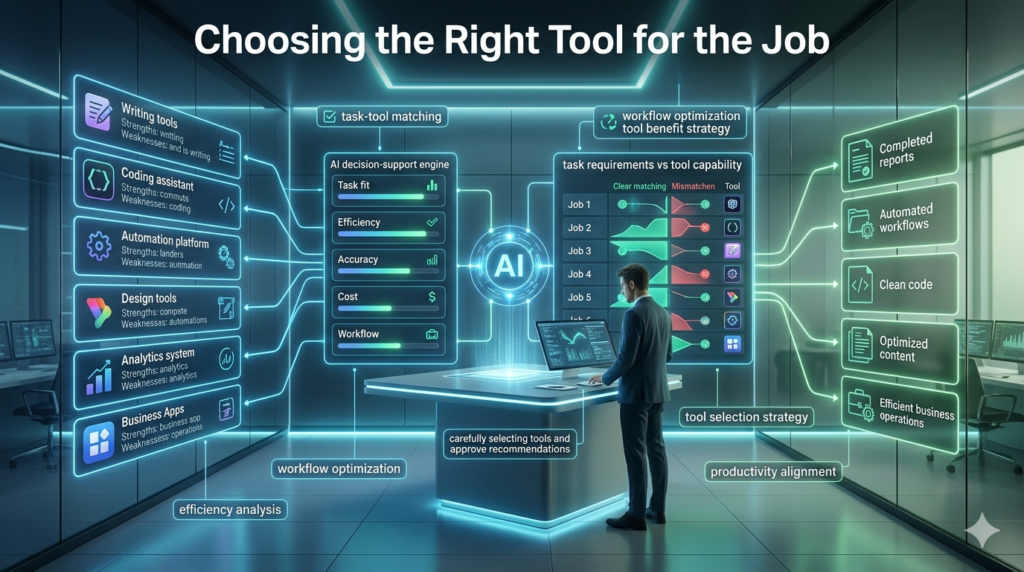
Not all grammar checkers are created equal. Some are built for the casual emailer, while others are geared toward the academic or the creative professional.
- The All-Rounders: Tools like Grammarly or Pro Writing Aid have become the industry standard because of their versatility. They offer goals you can tell the software if you’re writing an informal message or a knowledgeable report. This adjustment of the underlying algorithm is crucial for getting relevant feedback.
- The Deep Divers: Pro Writing Aid, in particular, offers sticky sentence reports and echo reports (finding words you use too often). These are invaluable for long-form authors but might be overkill for someone just trying to clean up a LinkedIn post.
- The Built-ins: Google Docs and Microsoft Editor have stepped up their game significantly. For 80% of people, these integrated tools are more than enough to prevent embarrassment.
The Ethics of Accuracy
We also need to talk about the ethical and bias-related aspects of these tools. Language is cultural. AI models can sometimes struggle with regional dialects, African American Vernacular English (AAVE), or the specific syntax of non-native speakers, often flagging these as errors rather than valid linguistic variations.
As a user, it’s important to maintain a level of healthy skepticism. You are the pilot; the AI is the navigator. If the navigator tells you to turn into a wall because the map says there’s a road there, you have to be the one to keep your hands on the wheel.
Practical Tips for the Modern Writer
If you want to get the most out of an AI grammar checker without losing your mind (or your voice), follow these personal rules of thumb:
- Write first, edit later: Do not leave the grammar checker on while you are in the flow state. The constant flickers and underlines will disrupt your creative process. Write your heart out, then turn the tool on for the cleanup phase.
- Ignore the “Score”: Many tools give you a grade out of 100. Don’t obsess over hitting 100. A score of 85 might actually represent a piece with more personality than a 100-score piece that feels like it was written by a robot.
- Read it aloud: After the AI has finished its work, read the text out loud. If the AI suggested a change that makes the sentence feel clunky or unnatural to your ears, reject the suggestion. Your ears are more sophisticated than any algorithm.
The Future: From Grammar to Meaning
We are entering a phase where these tools aren’t just checking grammar; they are checking logic and sentiment. They can tell you if you sound unsure and suggest more confident phrasing. They can scan for inclusivity to ensure your language isn’t inadvertently alienating a group of people.
The goal isn’t to replace the writer, but to augment them. We are moving toward a Centaur model of writing half human intuition, half machine precision. It’s a powerful combination, provided we don’t forget which half is supposed to be in charge.
FAQs
Q: Can an AI grammar checker replace a human editor?
A: Not entirely. While they are great for surface-level errors (spelling, punctuation, basic syntax), they cannot check for factual accuracy, structural flow, or deep nuances in storytelling. A human editor understands the audience in a way a machine cannot.
Q: Are these tools safe for confidential work?
A: This is a major consideration. Most free online tools process your data on their servers. If you are working on highly sensitive legal or medical documents, you should check the privacy policy or use an enterprise version with local processing to ensure your data isn’t being used to train future models.
Q: Will using a grammar checker make my writing worse over time?
A: It depends on how you use it. If you blindly click accept all, your skills may atrophy. However, if you treat every suggestion as a learning moment asking why the tool is flagging a certain phrase it can actually act as a powerful tutor, improving your natural writing ability.
Q: Do these tools work for creative writing, like fiction?
A: They can be helpful for catching typos, but they often struggle with voice. In fiction, characters often speak in fragments or use slang. You’ll find yourself hitting “Ignore” more often in fiction than in technical writing.