
I remember the old days in sales. The CRM was a digital rolodex, a place to dump contacts and log calls after the fact. It was a record keeping chore. Marketing operated in its own silo, blasting out emails and hoping something stuck. Customer service was a reactive fire fighting operation. The thought of truly understanding a customer’s journey, let alone predicting their next move, felt like a pipe dream.
Then, artificial intelligence entered the scene, not with a bang, but with a quiet, transformative hum. It didn’t replace the human touch; it supercharged it. AI-powered CRM automation is no longer a futuristic concept for enterprise giants. It’s a practical toolkit reshaping businesses of all sizes, and if you’re not paying attention, you’re already falling behind.
From Data Entry Clerk to Strategic Coach
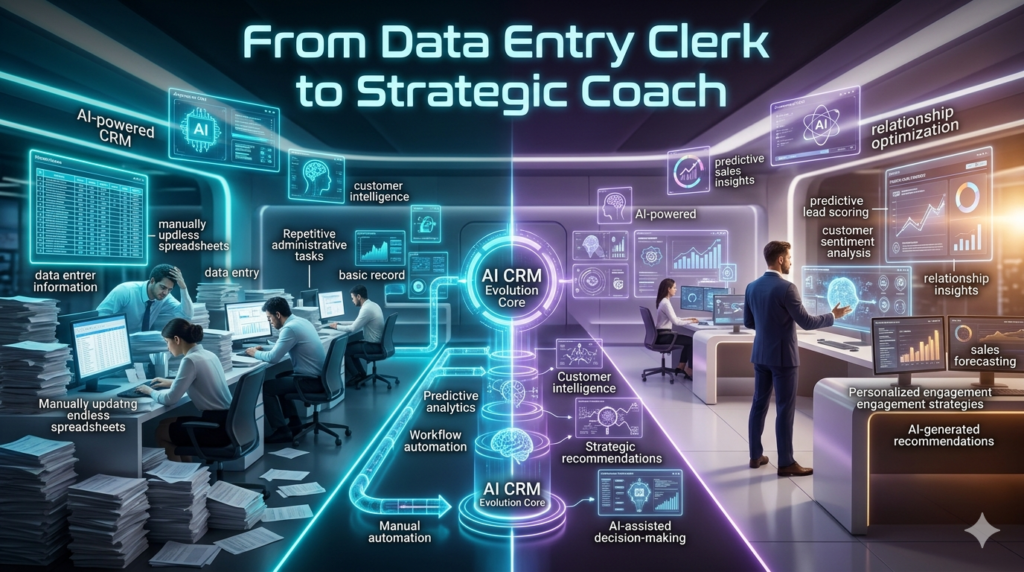
The most immediate and profound shift I’ve observed is the liberation from administrative hell. A sales rep’s primary asset is their time and their rapport with people. Yet, studies consistently show they spend less than 35% of their time actually selling. The rest? Data entry, scheduling, logging activities, and manually scoring leads. It’s soul crushing work. This is where AI steps in as the ultimate digital assistant. Modern AI driven CRMs use natural language processing (NLP) to automatically log calls, emails, and meeting notes.
They parse communication to extract key details budget mentions, competitor references, follow up dates and populate the correct fields without a finger lifted. It doesn’t just save time; it ensures data hygiene. A clean, accurate database is the fertile soil from which every smart insight grows. But the real magic is in the shift from recording the past to influencing the future. The CRM evolves from a passive repository to an active coach.
The Three Superpowers of AI in CRM
Through implementing and auditing these systems for various clients, I’ve seen three capabilities consistently deliver transformative ROI.
1. Predictive Lead Scoring and Prioritization:
This is the game changer. Old lead scoring was static. You might assign 10 points for visiting the pricing page and 5 for downloading a whitepaper. AI throws that rulebook out the window. It analyzes hundreds of signals across your entire database from firmographic data to behavioral patterns and even the sentiment in email replies to identify which leads most resemble your most successful past customers.
I worked with a mid sized SaaS company drowning in 5,000 new marketing leads a month. Their sales team was paralyzed. We implemented an AI scoring model. Suddenly, the system highlighted a small subset of leads showing silent signals like a job title change, frequent visits to technical documentation, or a pattern of engagement that mirrored their best clients. Sales could now focus their energy on the 50 most promising prospects, not the 5,000. Conversion rates on those prioritized leads jumped by 40% in a quarter.
2. Hyper-Personalized Customer Journeys:
Generic email blasts are dead. Today’s customers expect you to know them. AI enables this at scale. By analyzing a contact’s entire interaction history pages visited, content consumed, support tickets filed, purchases made the system can trigger perfectly timed, relevant communications.
Imagine a customer who bought a high end coffee machine six months ago. The AI knows the typical lifecycle of the water filter. Three weeks before it’s due for replacement, it automatically sends a personalized email with a one click reorder link. Or, if that customer has been browsing your blog on latte art techniques, it triggers a workflow offering a discount on a milk frothier. This isn’t creepy; it’s helpful. It demonstrates you’re paying attention to their needs, not just pushing a sale.
3. Proactive and Intelligent Service:
Customer service is often the most reactive part of a business. AI flips that script. By integrating with helpdesk and chatbot systems, AI within the CRM can analyze incoming queries for sentiment and urgency. A frustrated email gets automatically flagged and escalated.
More impressively, it can be proactive. By monitoring product usage data (with permission) for a SaaS client, the AI can detect a drop off in feature adoption. It can then prompt a customer success manager to reach out with a helpful tutorial video before the customer gets frustrated and considers churning. It turns potential problems into loyalty building moments.
The Human in the Loop: Where AI Meets EQ
Here’s the critical caveat I always stress: AI is a powerful tool, not a replacement for human judgment and emotional intelligence. The best implementations are collaborative. The AI handles the data crunching, pattern recognition, and repetitive tasks. It surfaces the “what” and the “who.” The human professional the salesperson, the marketer, the service agent provides the “why” and the “how.”
They bring context, creativity, and genuine empathy that no algorithm can replicate. An AI might flag a customer as “at-risk” based on usage data, but a savvy account manager knows the client just had key personnel changes and needs a consultative, patient approach, not an automated discount offer.
Implementation: Crawling Before You Run
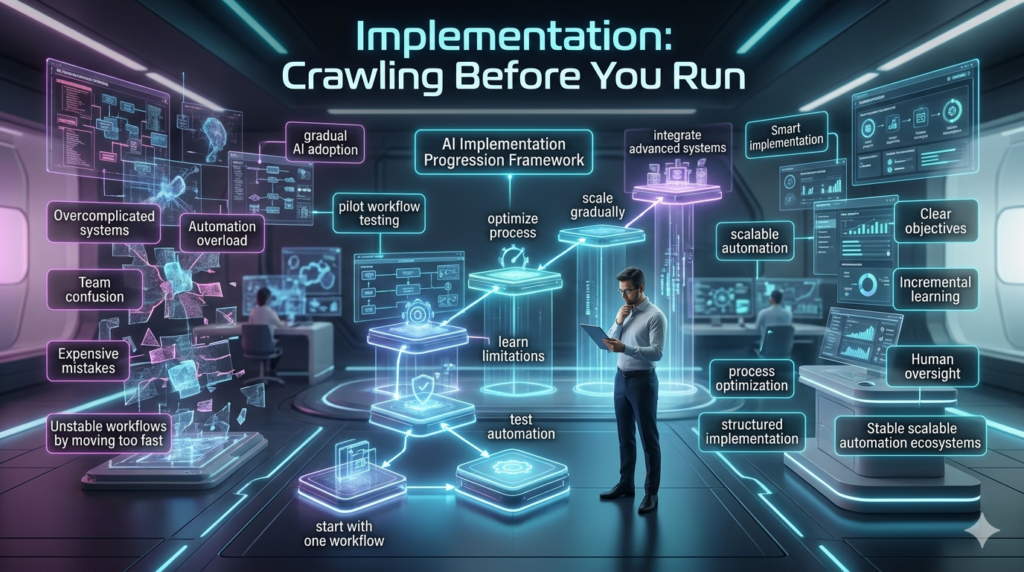
Jumping into AI CRM automation can be daunting. My advice? Start small and prove value.
- Audit Your Foundation: AI needs good data. If your CRM is a mess of duplicate records and incomplete fields, fix that first. Garbage in, gospel out is a dangerous myth.
- Pick One Pain Point: Don’t try to boil the ocean. Is it lead prioritization? Reducing churn? Pick a single, measurable problem where a lack of insight is costing you money.
- Choose a Platform with Embedded AI: You don’t necessarily need a separate, expensive AI layer. Major CRM platforms like Salesforce Einstein, HubSpot, and Microsoft Dynamics 365 have robust, native AI capabilities built into their core offerings now. They’re accessible and designed to work with your existing data.
- Measure Ruthlessly: Establish clear KPIs before you start. Is it time saved per rep? Increase in qualified lead conversion? Reduction in customer churn rate? Track these to demonstrate ROI and secure buy in for further expansion.
The Ethical Roadmap
We must navigate this with our eyes open. Data privacy is paramount. Transparency is non negotiable. Customers should know when they’re interacting with an AI-driven system. Bias in AI is a real risk; if your historical sales data is biased toward a certain demographic, your AI will perpetuate that bias. Regular audits and diverse training data are essential safeguards. The future isn’t about AI versus humans.
It’s about the sales professional who leverages AI to build deeper relationships. It’s the marketer who uses predictive analytics to create campaigns that genuinely resonate. It’s the service agent who, equipped with a customer’s complete AI-curated history, can solve problems in minutes. AI CRM automation is the lever; you are the fulcrum. The revolution is here, and it’s time to pick up the tool.
FAQs
Q: Is AI CRM automation only for large enterprises?
A: No. With the rise of AI features embedded in mainstream CRM platforms, businesses of all sizes can now leverage tools like predictive lead scoring and automated email personalization.
Q: Will AI replace sales and marketing jobs?
A: It is more likely to transform roles. AI handles repetitive, data-heavy tasks, freeing professionals to focus on strategy, creative problem solving, and building genuine human relationships.
Q: How much does it typically cost to implement?
A: Costs vary widely. Many CRMs now include basic AI features in their standard subscriptions. Advanced models or custom implementations may require additional investment in platform upgrades or consulting.
Q: How long does it take to see results?
A: Some benefits, like time saved from automated data entry, are immediate. Strategic outcomes like improved conversion rates or reduced churn often require a quarter or more of data analysis and refinement to become evident.
Q: What’s the biggest mistake companies make?
A: Implementing AI without a clear strategy or clean data. The technology is only as good as the problem it’s solving and the information it learns from. Starting with a specific, measurable goal is crucial.