
I still remember the first “AI chatbot” I ever implemented for a business client, about six years ago. It was for a mid sized e commerce company drowning in basic customer service queries order tracking, return policies, store hours. We used a leading platform of the time, and after weeks of scripting decision trees and feeding it canned responses, we launched it with high hopes. The result? It frustrated users almost immediately. If you deviated from its narrow script, it would loop endlessly or spit out irrelevant answers. We called it the “Frequently Argued-Questions Bot.”
Thankfully, the technology has evolved light-years since then. Today’s AI chatbot software, powered by advancements in large language models and natural language understanding, is a fundamentally different beast. But the core challenge for businesses remains the same: cutting through the marketing jargon to understand what these tools can actually do, where they fall short, and how to implement them without causing more headaches than they solve.
From Scripted Parrots to Conversational Partners
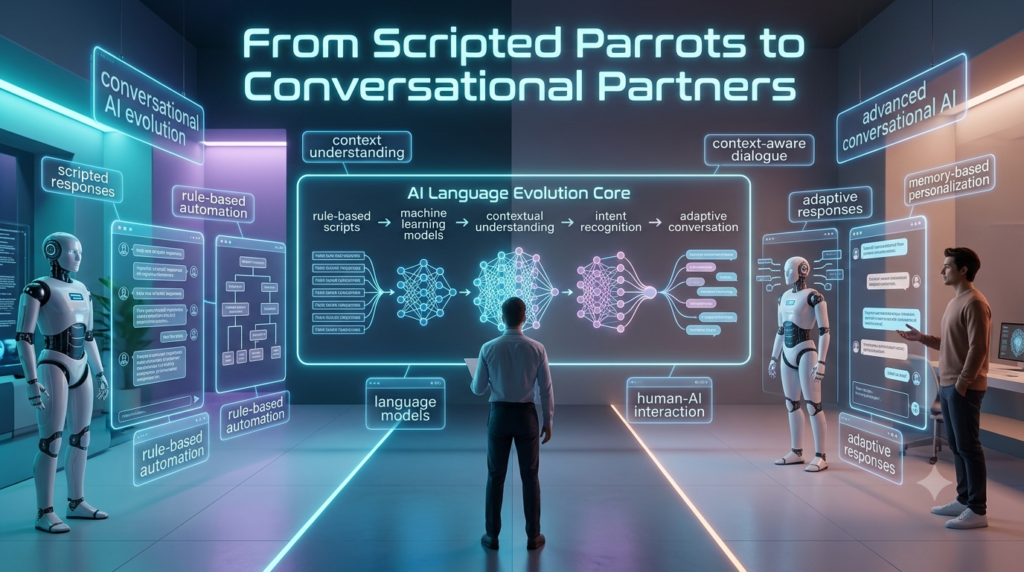
The key shift has been from rule based systems to generative AI. The old bots followed strict if-then logic. They were good for rigid workflows but terrible at understanding intent or handling nuance. Modern platforms, powered by models like GPT-4, Claude, or open source alternatives, are different. They don’t just retrieve pre-written answers; they generate responses based on the context of the conversation and the data they’ve been trained on or fed. This allows for much more natural dialogue. A customer can say, “My package hasn’t shown up and I’m ticked off,” and the bot can understand the sentiment (“ticked off”), identify the core issue (missing package), and respond empathetically while pulling up the tracking info.
But and this is a critical but this generative power is a double edged sword. These models can hallucinate, confidently providing incorrect information. I saw this firsthand when a client’s bot invented a completely fictitious warranty policy because it was trying too hard to be helpful. That’s why the most crucial component of any serious deployment isn’t the model itself; it’s the guardrails and the knowledge base you connect it to.
The Non-Negotiables: What to Actually Look For
When my team evaluates chatbot software today, we ignore the flashy demos and dig into the architecture. Here’s what truly matters:
1. Integration Capabilities: A chatbot is useless if it lives on an island. The best software seamlessly connects to your CRM (like Salesforce), helpdesk (Zendesk, Fresh desk), and databases. This allows it to do more than just talk; it can act. It can check a real inventory system, update a customer’s shipping address in real time, or schedule an appointment directly into a calendar. Without deep integrations, you’ve just built a fancier FAQ page.
2. Control and Customization: You need to be able to set its boundaries. Can you define its personality and tone to match your brand? Can you easily create specific conversational flows for critical processes like returns or technical support? More importantly, can you restrict what it talks about? You don’t want your banking chatbot suddenly offering opinions on current events. Look for a platform with a robust admin dashboard that lets your team manage this without needing a PhD in machine learning.
3. The Handoff Protocol: No AI is perfect. The moment a conversation gets too complex, too sensitive, or too stalled, it must escalate gracefully to a human agent. The transition should be smooth, transferring the full conversation history so the customer doesn’t have to repeat themselves. The worst implementations are the ones where the bot stubbornly refuses to admit defeat, leaving the user trapped in a loop of “I’m sorry, I didn’t understand that.”
Real-World Implementation: It’s a Process, Not a Plug-In
Buying the software is the easy part. The hard work is in the implementation, and it’s here where most projects fail.
First, you have to curate your knowledge base. This isn’t just dumping your entire website into a PDF. It’s organizing clean, accurate, and up-to-date information about your products, services, and policies. The AI is only as good as the data it can access. If your internal documentation is a mess, your chatbot will reflect that chaos.
Second, start narrow and specific. Don’t try to build an omniscient digital CEO on day one. Identify one or two high volume, repetitive tasks. For a SaaS company, that might be onboarding new users and handling password resets. For a retailer, it could be order tracking and return initiation. Prove its value in a contained area before expanding its role.
Third, prepare your human team. This is often overlooked. Your customer service agents aren’t being replaced; their roles are evolving. They need training on how to work with the AI reviewing escalated chats, correcting its mistakes in a feedback loop, and handling the more complex, emotionally nuanced interactions the bot filters to them. The goal is augmentation, creating a hybrid team where the bot handles the repetitive 70% so humans can focus on the 30% that requires empathy, creativity, and complex problem solving.
The Ethical and Practical Quagmires

We also have to talk about the elephant in the room: transparency and data privacy. Are you legally obligated to tell users they’re talking to an AI? In many regions, the answer is increasingly yes, and it’s just good practice. Deception erodes trust fast. Furthermore, these conversations are a goldmine of customer data. Where is that data stored? How is it anonymized? Is it being used to further train the model, and if so, do customers have an opt-out? You need clear answers from your vendor on compliance with GDPR, CCPA, and other regulations. A data breach originating from your chatbot is a nightmare scenario.
Finally, there’s the issue of bias. AI models can reflect and amplify biases present in their training data. A recruitment chatbot, if not carefully designed and monitored, could inadvertently discriminate. Ongoing auditing isn’t optional; it’s a core operational cost.
The Bottom Line
AI chatbot software today is an incredibly powerful tool for scaling customer engagement, streamlining operations, and providing instant 24/7 support. But it’s not a magic wand. It’s a complex piece of technology that requires thoughtful strategy, clean data, continuous human oversight, and a clear ethical framework.
The most successful implementations I’ve seen view the chatbot not as a cost-cutting robot, but as a new member of the team one that needs training, clear boundaries, and a human support system to truly thrive. When that balance is struck, the results are genuinely transformative, moving beyond deflecting tickets to building real, efficient, and satisfying customer relationships.
FAQs
Q: How much does AI chatbot software typically cost?
A: Pricing varies wildly, from freemium models with basic features to enterprise plans costing thousands per month. Most charge based on the number of conversations, the complexity of integrations, or the volume of data processed. Always factor in potential costs for customization and ongoing management.
Q: Can AI chatbots completely replace human customer service agents?
A: No, and they shouldn’t. They excel at handling high-volume, routine inquiries, freeing up human agents for complex issues that require empathy, negotiation, and advanced problem-solving. The ideal model is a collaborative one.
Q: How long does it take to implement one effectively?
A: A basic, limited deployment can take a few weeks. However, a truly robust, integrated, and well-trained system is an ongoing project. Plan for at least 2-3 months for the first phase, with continuous optimization thereafter.
Q: Do customers actually like talking to chatbots?
A: They do when the bots are helpful, efficient, and transparent about what they are. Customers hate bad chatbots ones that misunderstand, loop, or can’t solve their problem. A well-designed bot that saves them time is generally appreciated.
Q: What’s the biggest mistake companies make?
A: Treating it as a “set it and forget it” project. Launching without a proper knowledge base, without integration, and without a plan for human oversight is a recipe for failure. Ongoing training and maintenance are critical.