
I’ve been in the trenches of software development and tech consulting for over a decade, and I’ve got to say watching the latest AI software roll out this year feels different. It’s not just about incremental updates to models we’ve already seen. The shift is tangible. The tools are no longer just assistants; they’re becoming genuinely autonomous operators, creative collaborators, and, frankly, a little unsettling in how capable they are.
Let’s cut through the hype cycle and look at the software that is actually changing workflows right now, the stuff you can install, subscribe to, or integrate by the end of the day.
The Rise of the Agentic Operating System
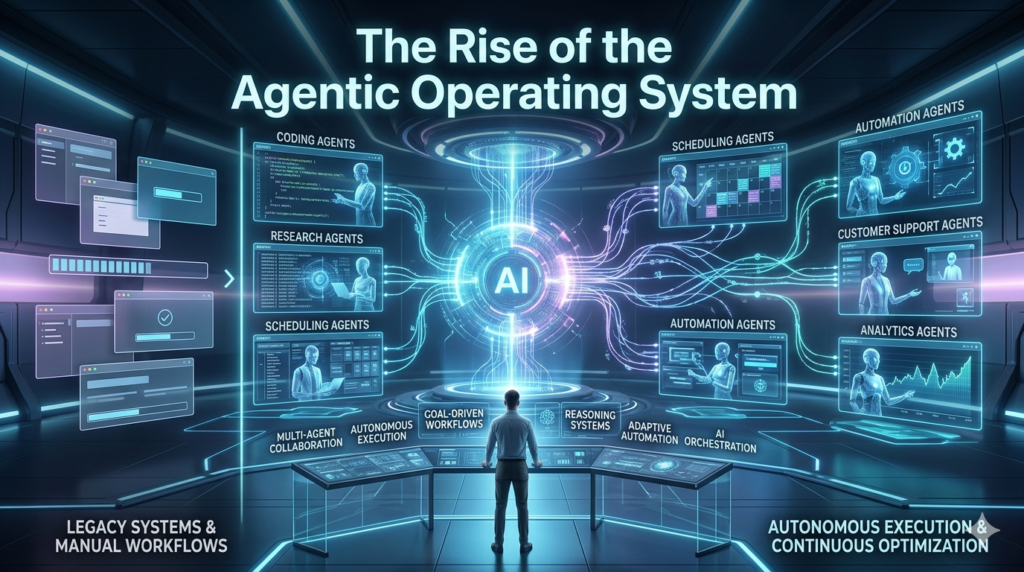
For the last two years, we’ve been talking at AI via chat interfaces. You type a prompt, it responds. The latest paradigm, and the biggest shift I’ve seen in recent months, is the agentic framework. We’re moving away from chatbots toward software that uses your computer for you. A prime example that finally went from closed beta to general availability is Claude’s “Computer Use” capability, alongside similar upstarts like Adept AI (now emerging in various enterprise forms). The core concept isn’t just to generate code; it’s to visually parse a screen, move a cursor, click buttons, and fill out forms across multiple applications. I recently set up a prototype for a logistics client where we connected an AI agent to their legacy AS/400 green-screen interface the kind of system that hasn’t seen a UI update since the 90s.
No APIs exist for it. We couldn’t rip it out because of cost. Instead, we gave the AI software a screenshot stream of the terminal. It learned to read the fixed-width text, navigate the menus via keystroke emulation, and transfer order data into a modern HubSpot instance. It made mistakes at first (it typed into the wrong field twice), but with a low-temperature setting and explicit rule-setting, it now runs a process that used to require three full-time data-entry clerks. This is not robotic process automation (RPA) with rigid scripts; it’s dynamic, fallible adaptation.
The Creative Suite Wars Have Changed
Adobe Firefly was a decent start, but the latest generation of creative AI software has matured beyond text-to-image novelty. The real muscle is in video and 3D consistency. The hype around Open AI’s Sora is justified, but if we’re talking about software you can actually download and integrate into a pipeline right now, Runway Gen-3 and Pica 2.0 are where the heavy lifting is happening. The breakthrough feature isn’t just generation; it’s lip-sync and scene extension. I watched a small indie film producer use Runway to fix a critical dialogue scene where the original audio was ruined by a police siren. Instead of an expensive reshoot, they fed the silent footage into the AI.
It perfectly generated the actress’s mouth movements to match the re-recorded dialogue, maintaining the grain of the original cinema camera. We’ve gone from look at this wobbly AI video to I can’t tell that scene was generated in about 18 months. What’s flying under the radar here is the ethics of the Style Reference” algorithms. The latest AI software doesn’t just mimic a concept; it can be locked to a specific, private dataset of a deceased actor or a franchise’s visual bible. The software exists; the legal clearance framework is what’s lagging.
The Quiet Revolution in Local Listeners
While cloud giants slug it out, the most intimate AI software evolution is happening directly on-device. Apple Intelligence is getting the headlines, but I’m more impressed by the quiet updates to Whisper.cpp and the integration of local Mistral and Llama 3 models into tools like Llama and LM Studio. I’ve noticed a significant shift in the healthcare sector here. A psychologist I consult for cannot ethically send patient session notes to a cloud API like ChatGPT. Last month, we deployed a locally running fine-tune of Llama 3 8B that runs entirely on a MacBook Air’s M3 chip with no internet connection. It listens to the audio of the session (sourced from a non-networked microphone), transcribes it into SOAP notes, and deletes the raw recording all within the memory sandbox of the machine.
The software exists right now, for free, and it runs at around 40 tokens per second. It’s not as brilliant as GPT-4o, but it doesn’t need to be; it just needs to accurately map “patient recounted a stressful event” to the correct clinical box. The latest software here, particularly the Open Interpreter project and the new local agents, bridges the gap between scary data sharing and utility. You download a four-gigabyte file, and you have an assistant that can parse your entire private email archive or contracts without a single packet leaving your network card.
The Genuine Pitfall: the “Shadow IT” Explosion
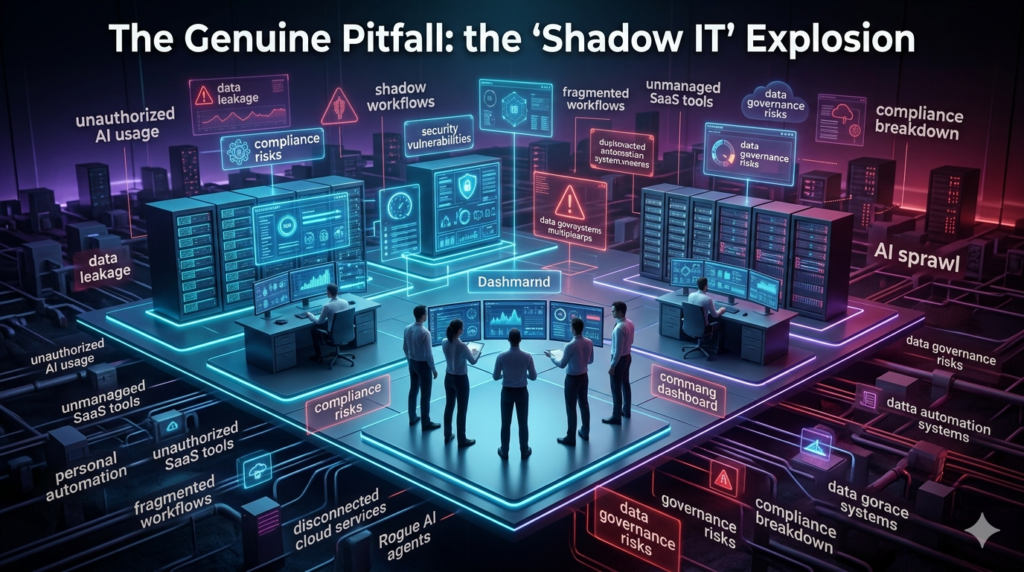
I can’t talk about what’s latest without mentioning the chaotic bleeding edge. The most alarming trend isn’t a specific software, but the “Shadow AI” stack I keep finding in enterprises. Employees are now using Cursor (the AI-integrated IDE), Devin (the autonomous coding agent), and Replat agents to build internal tools without telling IT. Just last week, a fintech company I work with discovered that a junior risk analyst had used Retool with a GPT-4o backend to build a credit assessment app. It was beautiful, functional, and completely outside the security perimeter. The analyst didn’t know she had exposed a prompt injection vulnerability where a malicious loan applicant could, by filling a Name field with a specific string, trick the AI into outputting previous customers’ financial summaries.
This isn’t a limitation of the AI software technically, the code was impressive. It’s a limitation of the move fast culture these tools enable. The latest software is so good at making prototypes production-ready that we’re skipping the crucial boring stuff: credential rotation, input sanitization, and rate limiting. The current generation of Wiz and Sync is scrambling to add AI-specific vulnerability scanning, but honestly, the attack vectors are evolving faster than the defenses.
Looking at the Codebase from Here
What’s genuinely “latest” feels like a collective step toward AI as runtime, not just text prediction. We’re seeing software like Sakana AI’s “AI CUDA Engineer”, which doesn’t just write Python but generates custom GPU kernels to speed up deep learning research that the human researchers didn’t even know how to write. We’re past the “wow, it can write a poem” stage. The latest AI software is deeply unsexy stuff: optimizing supply chain ATP (Available-to-Promise) logic, running eye-tracking adjustments in the new Apple Vision Pro update, and summarizing ten thousand pages of regulatory filings.
My advice after messing with this stuff daily? Pick a local model for your sensitive data, learn agentic prompting if you deal with legacy systems, and for heaven’s sake, build a kill switch into any AI agent you give write-access to the file system. I learned that last point the hard way when a test agent decided my “Downloads” folder needed aggressive, recursive organizational cleanup. I still can’t find my tax documents from 2022.
FAQs
Q: What is the most significant shift in AI software right now?
A: The transition from chat-based chatbots to agentic AI that can physically use your keyboard and mouse to complete complex multi-app tasks independently.
Q: Can the latest AI software write secure, production-ready code?
A: It can write functional code extremely fast, but it often ignores security context. You still need a human developer to lock down credentials, secure the supply chain, and defang prompt injection risks.
Q: Is OpenAI’s Sora available to integrate into my workflow yet?
A: Sora is limited and often capacity-constrained. For reliable production work, especially with precise control over lip-sync and scene generation, tools like Runway Gen-3 are currently more practical.
Q: How can I use AI for work without leaking confidential data to the cloud?
A: Use local inference tools like Ollama or LM Studio with open-source models like Llama 3 or Mistral. These run entirely on your device’s RAM and don’t require an internet connection.
Q: What is “Shadow AI” and why is it dangerous?
A: It’s when non-technical employees use powerful AI tools to build unofficial workflows or apps without oversight. It creates massive risk because these apps often lack basic corporate security or data privacy controls.
Q: Are AI agents replacing virtual assistants like Siri or Alexa?
A: The integration is beginning. The latest software focuses on “App Intents” where the AI can control your apps directly (like finding a photo, editing it, and texting it) rather than just answering trivia questions.