
I spent last Tuesday auditing a friend’s e commerce stack. She’d plugged an AI marketing automation platform into her Shopify store six months ago, convinced it would handle her holiday campaign while she slept. Instead, it sent her VIP customers generic “Welcome!” sequences, blew through her ad budget targeting lookalike audiences that looked nothing alike, and generated subject lines so bland they could’ve been written by a spreadsheet. The dashboard showed green checkmarks across the board. Her revenue chart told a different story. If you’ve experimented with marketing automation lately, that disconnect probably sounds familiar.
We’re past the point where simply scheduling an email blast or auto posting to Instagram counts as innovation. Modern AI marketing automation promises something messier and more powerful: systems that learn from behavior, predict intent, and shift tactics in real time without a human clicking send. But after fifteen years of watching brands adopt these tools from scrappy startups to Fortune 500 teams I’ve learned that the technology works best when you stop expecting it to think, and start treating it like an extremely fast, slightly naive intern who needs constant supervision.
What It Actually Means
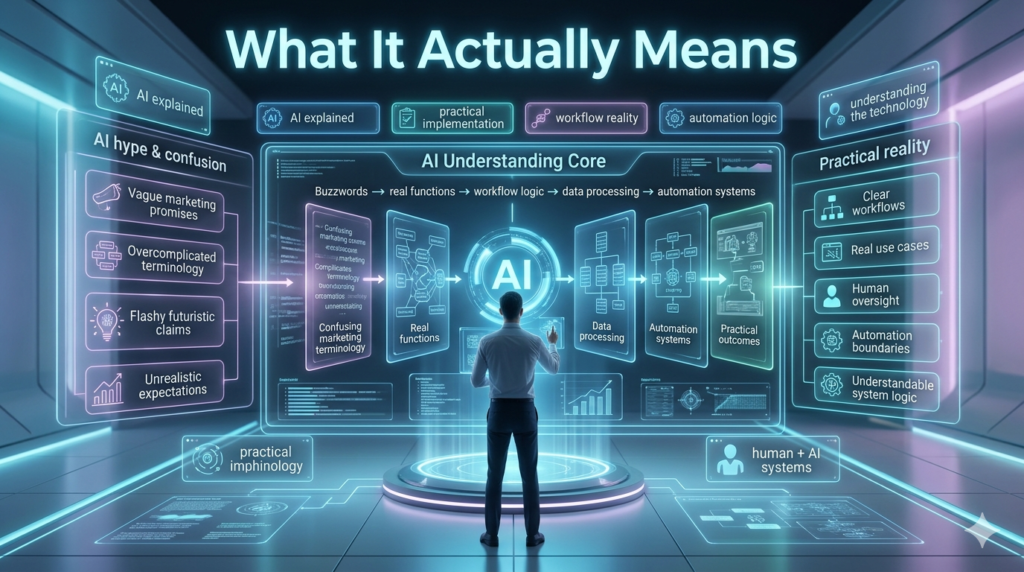
Old school marketing automation was basically plumbing. If a user abandons a cart, send email B. If they click a link, tag them as interested. It was deterministic: input triggers output, every time. AI-driven automation, by contrast, is probabilistic. It ingests thousands of signals browsing history, purchase latency, email open patterns, even on site scroll depth and calculates the likelihood that a specific action will resonate at a specific moment. The difference matters. A traditional drip campaign might email everyone on Tuesday at 10 a.m. because that’s the industry average.
An AI system figures out that Sarah checks her inbox during her lunch break at 12:43, while David engages at 8 p.m. after he puts his kids to bed. It adjusts send times individually. It tweaks subject lines based on sentiment analysis. It shifts budget from Facebook to Google Search automatically when conversion costs start diverging. That sounds like magic, and sometimes it is. But only when the groundwork is solid.
Where the Magic Actually Happens
I worked with a B2B SaaS company last year about $4 million in ARR, selling project management software to construction firms. Their problem wasn’t lead volume; it was lead chaos. Marketing dumped 2,000 qualified contacts into Salesforce each month, and the sales team called them alphabetically. No joke. By the time they reached the M’s, half the list had gone cold. We implemented predictive lead scoring through their automation platform. Instead of static rules like “downloaded a whitepaper = 10 points,” the model analyzed two years of closed-won deals against behavioral data. It started surfacing patterns no one had noticed: prospects who visited the pricing page twice and watched at least 60% of the onboarding video converted at 4x the average rate.
Within a quarter, the sales team was calling the top 12% of scored leads first. Their connect rate jumped from 8% to 22%. Average sales cycle dropped by eleven days. That’s the sweet spot. AI marketing automation excels at pattern recognition inside noisy datasets. Send-time optimization, dynamic customer segmentation, smart bidding in PPC, and churn prediction all fall into this category. The machine spots correlations humans miss because we’re biased toward the last conversation we had or the biggest client we landed.
The Messy Middle
Here’s the catch. That SaaS company almost tanked the project in week one because their CRM was a disaster. Duplicate records. Job titles written in seventeen different formats. Leads tagged hot because an intern in 2021 clicked the wrong dropdown. If you feed garbage into an AI model, it doesn’t get confused it gets confident. It will aggressively market to phantom segments and optimize toward conversions that never actually happened. Data hygiene is the unsexy prerequisite no vendor puts on their homepage. Before you even look at AI features, you need unified customer profiles, consistent taxonomy, and a ruthless approach to pruning dead contacts. I’ve seen companies spend six figures on a platform and zero dollars cleaning their data warehouse.
Predictably, they conclude that “AI doesn’t work for our industry.” There’s also the human fatigue factor. Inboxes are saturated with pseudo-personalized outreach. You know the type: “Hey [FirstName], I noticed you’re in [City] and love [Job Title]!” When every brand uses automation to simulate intimacy at scale, consumers develop radar for it. The tactic stops working not because the tech failed, but because the strategy became lazy. AI can optimize the delivery of a message; it cannot manufacture genuine connection. That still requires a human who understands context, culture, and nuance.
Ethics and the Creep Factor
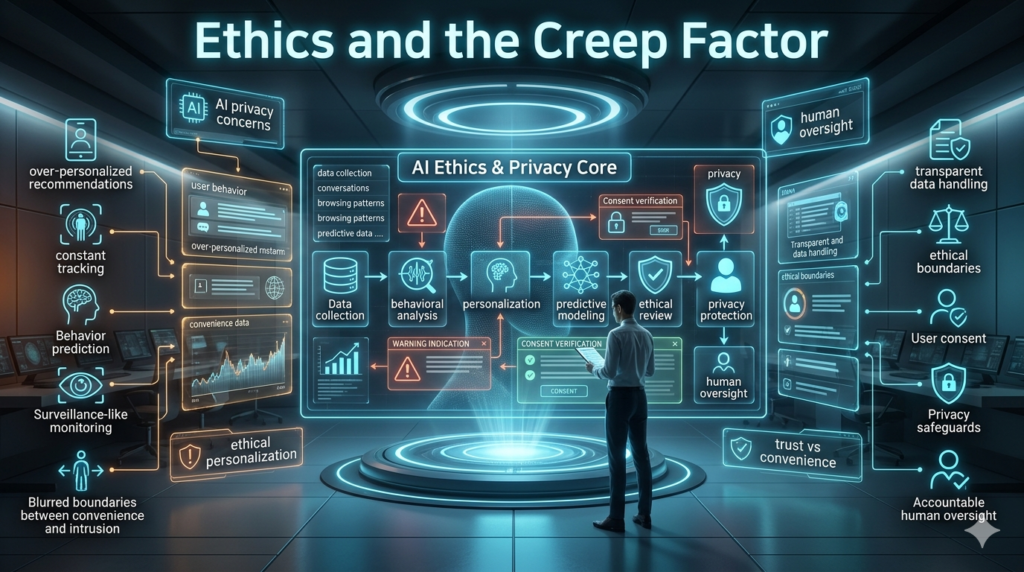
Back in 2012, Target made headlines for predicting a teenager’s pregnancy before her father knew. We’ve only gotten more precise since then, and the ethical lines haven’t gotten any clearer. Modern AI marketing automation can infer health conditions, financial distress, or relationship status from behavioral breadcrumbs. Just because you can target someone with baby formula ads because they recently browsed prenatal vitamins doesn’t mean you should especially without transparent consent.
Regulations are tightening. GDPR in Europe, state-level privacy laws in the U.S., and the gradual death of third-party cookies mean the wild west era of data scraping is ending. The brands that will thrive are the ones building robust first-party data strategies: offering genuine value in exchange for explicit permission, then using AI to improve the experience rather than exploit the vulnerability. Trust is becoming a competitive advantage, not a compliance checkbox.
Getting Started Without Breaking the Bank
You don’t need an enterprise budget to benefit here. A mid sized business can start with one channel usually email or paid search and layer in intelligence gradually. Most major platforms like HubSpot, Flavio, or Active Campaign now include native AI features that were reserved for bespoke systems just three years ago. My advice? Start with predictive send times and basic segmentation. Let the system learn your audience’s rhythms for thirty days.
Meanwhile, audit your creative process. The best AI marketing automation deployment I saw last year paired algorithmic optimization with a human copywriter who reviewed every automated message before it went live. The AI handled the when and who; the human owned the what and why. Response rates doubled compared to the previous fully automated quarter.
Looking Ahead
We’re entering 2026 with a clearer picture of what this technology actually is. It’s not a replacement for marketers. It’s a force multiplier for the disciplined ones. The companies winning right now aren’t those with the most sophisticated models; they’re the ones that treat AI marketing automation as infrastructure for human judgment, not a substitute for it. The algorithm can tell you the optimal moment to ask for the sale. It can’t look a frustrated customer in the eye and apologize when the product falls short. That division of labor machine precision paired with human empathy is where the real opportunity lives.
FAQs
Q: What exactly is AI marketing automation?
A: It’s the use of artificial intelligence to optimize marketing tasks like email timing, ad bidding, or audience segmentation by learning from data patterns rather than following fixed rules.
Q: Is AI marketing automation only for large enterprises?
A: Not anymore. Many mid market and small business platforms now include AI features for email optimization, chatbots, and lead scoring at accessible price points.
Q: Will AI marketing automation replace marketing jobs?
A: Unlikely. It changes the nature of the work. Routine execution and data analysis shift to machines, while strategy, creative direction, and relationship management become more central.
Q: How much does it cost to implement?
A: It varies widely. Entry-level platforms with basic AI start around $50–$200 per month, while enterprise suites can run thousands monthly. The hidden cost is usually data preparation and integration.
Q: What’s the first step to getting started?
A: Clean your data. Before adopting any AI tool, audit your customer records, remove duplicates, and standardize your fields. A model is only as good as the information it learns from.