
I’ve spent the last eighteen months drowning in browser tabs. Not research papers or news articles, but AI tools dozens of them, each promising to revolutionize my workflow. Last Tuesday alone, I found myself toggling between Claude, ChatGPT, and Perplexity while trying to draft a technical whitepaper, and I realized something: we’ve moved past the question of whether to use AI into the far messier territory of which one, and when.
The market has fragmented into a bizarre ecosystem of specialized assistants. It’s no longer enough to ask “What’s the best AI?” because that question assumes these tools are interchangeable, like different brands of bottled water. They’re not. They’re more like choosing between a sports car, a pickup truck, and a motorcycle they’ll all get you somewhere, but the journey and the destination change dramatically depending on your choice.
The Current Landscape: More Than Just Chatbots
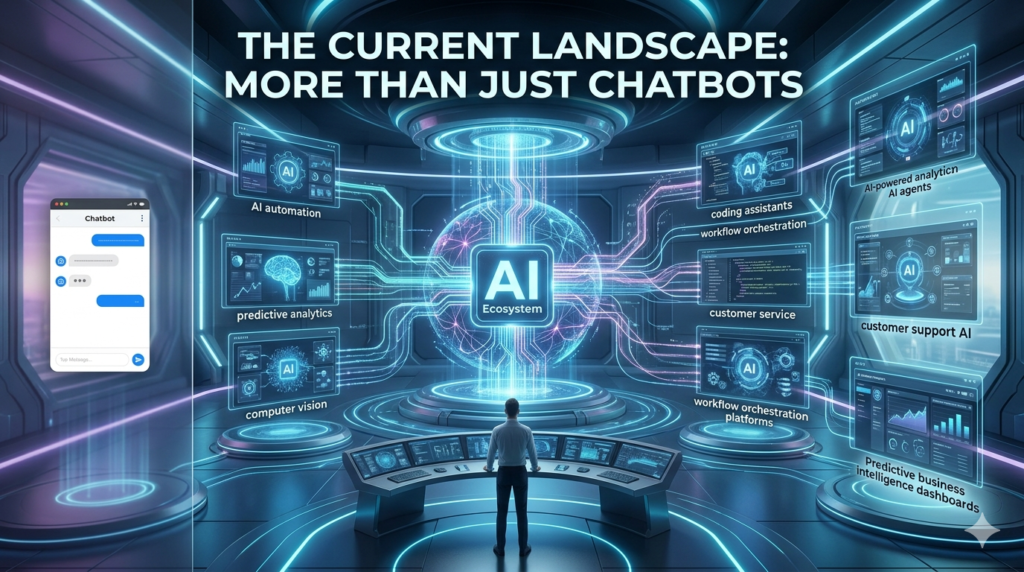
When most people think AI tools, they picture chat interfaces ChatGPT, Claude, Gemini trading witty responses or coding solutions. But that’s only the surface layer. In my daily work, I’m actually juggling four distinct categories: general-purpose LLMs (the chatbots), image generators (Midjourney, Stable Diffusion, DALL-E 3), coding assistants (GitHub Copilot, Cursor, Codeium), and research aggregators (Perplexity, Elicit). Each category demands a completely different evaluation framework. Take text generation. GPT-4o and Claude 3.5 Sonnet dominate most conversations, but they think differently. GPT-4o feels like a brilliant but slightly manic intern fast, eager to please, occasionally hallucinating confidence when it’s actually guessing. Claude, conversely, operates like a cautious senior editor.
I’ve watched Claude refuse to process sensitive legal documents I fed it, citing ethical guidelines, while GPT-4o happily summarized them with fabricated citations. Neither reaction was “wrong,” but they reveal divergent philosophies about safety versus utility. For visual work, the gap widens further. Midjourney produces artwork that feels touched by human intention moody, atmospheric, sometimes eerily beautiful but good luck getting it to generate readable text or follow precise brand guidelines. DALL-E 3, integrated into ChatGPT, sacrifices some aesthetic flair for obedience; it’ll put your logo exactly where you asked, even if the lighting looks flatter. Stable Diffusion offers infinite customization if you enjoy tweaking Python scripts at 2 AM, which I don’t, but my developer friends swear by its flexibility.
The Metrics That Actually Matter
Here’s what nobody tells you in the marketing materials: raw capability matters less than context window and integration. I learned this the hard way when I tried using early versions of ChatGPT to analyze a 200-page regulatory filing. It choked after page fifty, forgetting its own conclusions. Claude’s 200K token window handled the entire document in one gulp, spotting contradictions between sections I’d missed during three manual readings. But context isn’t everything. When I’m coding, I need latency under 300 milliseconds. Cursor (built on GPT-4 but optimized for IDE integration) predicts my next line of code before I finish typing.
Switching to a browser-based tool would break my flow state entirely. Meanwhile, for research tasks requiring real-time data, Perplexity’s ability to cite sources beats every other tool, even if its creative writing sounds like a textbook. Cost structures create another hidden trap. OpenAI’s API pricing looks reasonable until you’re processing thousands of customer service tickets daily. Suddenly, self-hosting an open-source model like Llama 3 on AWS becomes economically inevitable, despite the engineering overhead. I’ve seen startups burn through ten thousand dollars in API credits in a week because they optimized for accuracy without calculating scale.
Real-World Decision Frameworks
So how do you actually choose? After numerous failed experiments, I’ve developed a pragmatic triage system. For creative brainstorming marketing copy, story concepts, divergent thinking I default to Claude. Its refusal to hallucinate aggressively means when it suggests a headline, I can trust it’s not accidentally plagiarizing something obscure. For rapid prototyping or tasks where speed trumps perfection (drafting emails, summarizing news), GPT-4o wins. When I need visual assets for social media that look professionally shot, Mid journey.
For technical documentation requiring precise accuracy? Perplexity, followed by manual verification. The integration question often overrides raw quality. My team uses Notion for documentation, so Notion AI (powered by Anthropic) wins by default for internal wiki updates despite being less capable than standalone Claude. Similarly, if your entire company lives in Google Workspace, Gemini’s native integration with Docs and Sheets might save more time than switching to a superior standalone model.
The Ethical Undercurrents
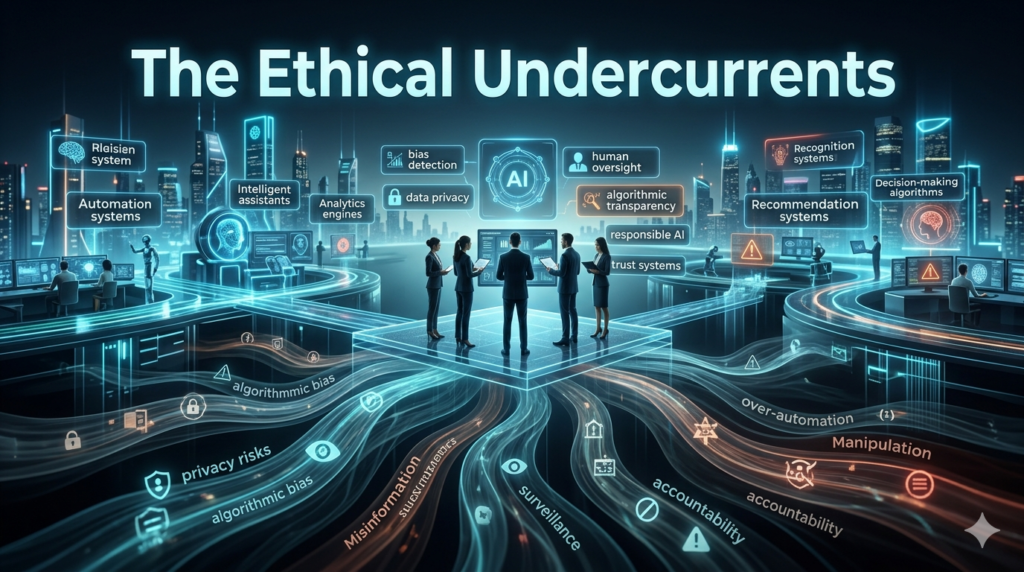
Comparison isn’t just about features. Last month, a client asked me to evaluate AI tools for processing medical records. This changes the calculation entirely. OpenAI’s data retention policies differ from Anthropic’s, which differ again from self-hosted solutions. Some tools train on your inputs by default; others offer enterprise guarantees. I’ve had to reject otherwise excellent tools because they couldn’t provide SOC 2 compliance or because their training data origins felt ethically murky.
Bias presents another layer. When testing image generators for a diversity initiative, I noticed Midjourney defaulted to specific cultural aesthetics unless heavily prompted otherwise, while Adobe’s Firefly, trained on licensed stock imagery, offered more balanced representations but less creative range. These aren’t technical specifications; they’re value judgments masquerading as feature comparisons.
Looking Forward Without Paralysis
The uncomfortable truth is that any comparison I write today will be partially obsolete by next quarter. GPT-5 will drop. Claude will expand its context window. Some startup I’ve never heard of will release a niche tool that solves one specific problem perfectly. The skill isn’t knowing which tool is best permanently, but developing the discernment to evaluate new options quickly. I’ve stopped trying to find the one perfect AI. Instead, I maintain a tool stack Claude for thinking, Perplexity for research, Cursor for coding, Mid journey for visuals accepting the friction of switching between them.
The alternative is vendor lock-in, and in a market moving this fast, monocultures are dangerous. The best AI tool isn’t the one with the highest benchmark scores. It’s the one that fits your specific cognitive style, integrates into your existing workflows, and aligns with your ethical boundaries. Test them ruthlessly, drop them without sentimentality when something better arrives, and remember the tool is only as good as the human judgment guiding it.
FAQs
Q: Which AI tool is best for writing essays?
A: Claude tends to produce more academically rigorous prose with fewer hallucinations, but always verify citations manually as AI models frequently invent sources.
Q: Is ChatGPT better than Google for research?
A: For quick overviews, yes, but use Perplexity or specialized academic tools if you need verifiable sources. ChatGPT’s training data has cutoff dates and can contain outdated information.
Q: Do I need to pay for premium AI tools?
A: Free tiers work for casual use, but professional work typically requires paid plans for higher usage limits, better models, and commercial usage rights especially for image generation.
Q: Can AI tools replace human editors?
A: Not yet. They excel at first drafts and grammar checking, but miss nuanced tone, cultural context, and factual subtleties that require human oversight.
Q: Are my conversations with AI private?
A: Generally no, unless you’re using enterprise plans with explicit privacy guarantees. Assume standard chat inputs may be used for model training unless the provider states otherwise.
Q: Which is easier to learn: Mid journey or DALL-E?
A: DALL-E 3 through ChatGPT is more intuitive for beginners since you can describe images conversationally. Mid journey requires learning specific syntax and parameters for best results.